Dateline April 2, 2012, The Masters Practice Round at Augusta National
Time to get back on the road in the Roadtrek. The last six months flew by; we will fill in the move to Flagler Beach and everything else from the winter as we go.
Saturday, March 31st, we dropped Janice's sister Connie and her husband Lee at the Jacksonville airport and began the drive north to Augusta for the Monday practice round at the Masters. It is easy to forget how many beautiful places sit along the east coast that we usually just drive past on the way home. Saturday night we stayed at the Georgia State Park on Jekyll Island. Beautiful island. Sunday morning we played a round on the Oleander Course at the Jekyll Island Club. There has been golf on this ground since 1910, when Donald Ross was commissioned to lay out a course for the members of the Jekyll Island Club, the winter retreat that the Rockefellers and Vanderbilts had favored a generation earlier. The USGA chose that original course as the testing site in 1924 for the new steel-shaft clubs and a redesigned golf ball, both of which went on to change the modern game. Dick Wilson redesigned the whole thing in 1964 into the 6,521-yard Oleander that we played, and it has been the local favorite ever since. Challenging and fun.
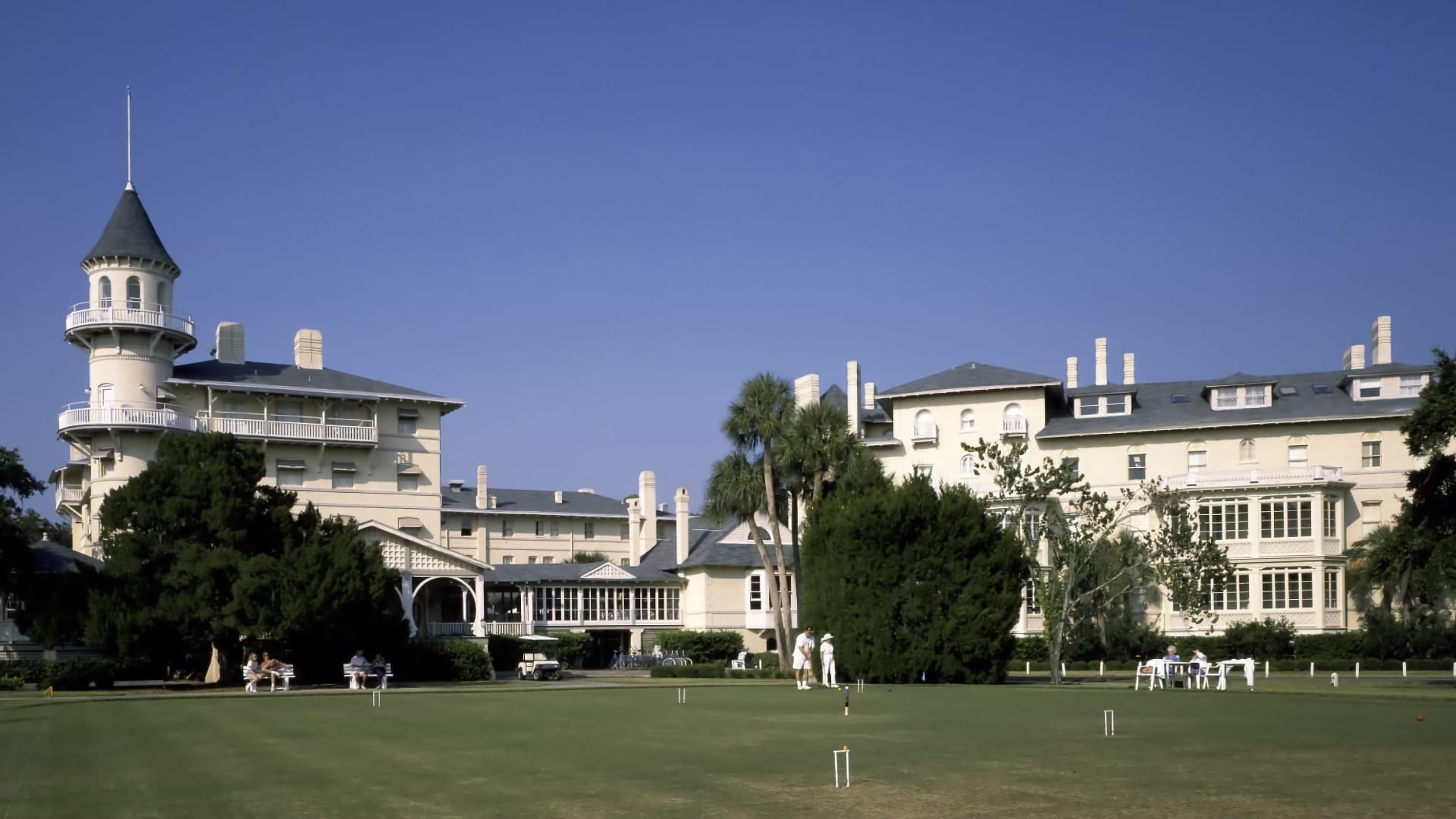
A little history about the club itself, since we found it irresistible. Founded in 1886, the Jekyll Island Club was the most exclusive private club in America at the turn of the last century. Membership was capped at one hundred, by invitation only, and at one point its members were said to represent something like one-sixth of the world's wealth. In 1910, a small group of those members met here in secret to draft what eventually became the Federal Reserve System. So the same ground that gave us steel-shaft clubs and a modern golf ball also gave us the American central bank. Not a bad résumé for one piece of Georgia coast.
We finished around 1:00 and pointed the Roadtrek the four hours up to Augusta. We will be back to Jekyll Island, probably in the fall, for a few days.
Arriving in Augusta we went straight to the Highlander RV Park to register and check the site for power, water, and the other necessities. With that handled we crossed town to Augusta National to scout where we could park in the morning. The drive through the neighborhoods near the course was a pleasure all on its own; the homes are something.
Layout figured out, we headed back to the RV park for the evening. Alarm set for 5:30, a good night's sleep, until the alarm.
We were out the door by 6:30 and parked at Augusta National by 7:00, second row. The gates do not open until 8:00, so we walked up to the main entrance and got in line for one of the golf shops. We had a long list of things to bring back for family and friends, and a few for ourselves. Shirts, towels, and hats with the Masters logo. The shopping is part of the pilgrimage; Masters merchandise is sold only at the course and only during tournament week. We dropped the bag back at the Roadtrek and headed to Gate 9.
Janice had been to Augusta before. She worked the Masters three years running with the IBM team that handled the scoring and the leaderboards, 1996 through 1998. The changes to the actual course since then were subtle. The changes to the infrastructure and security were enormous.
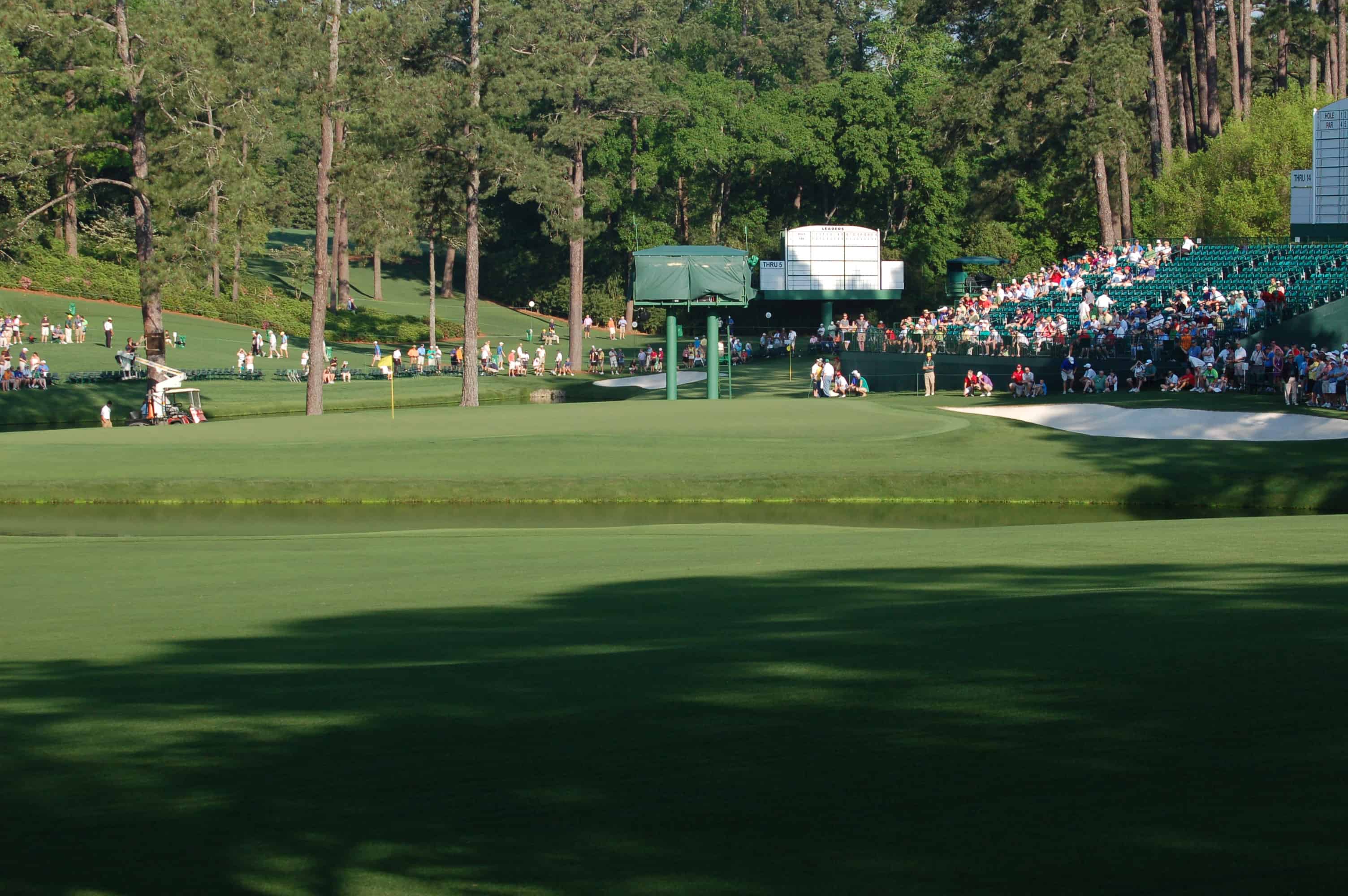
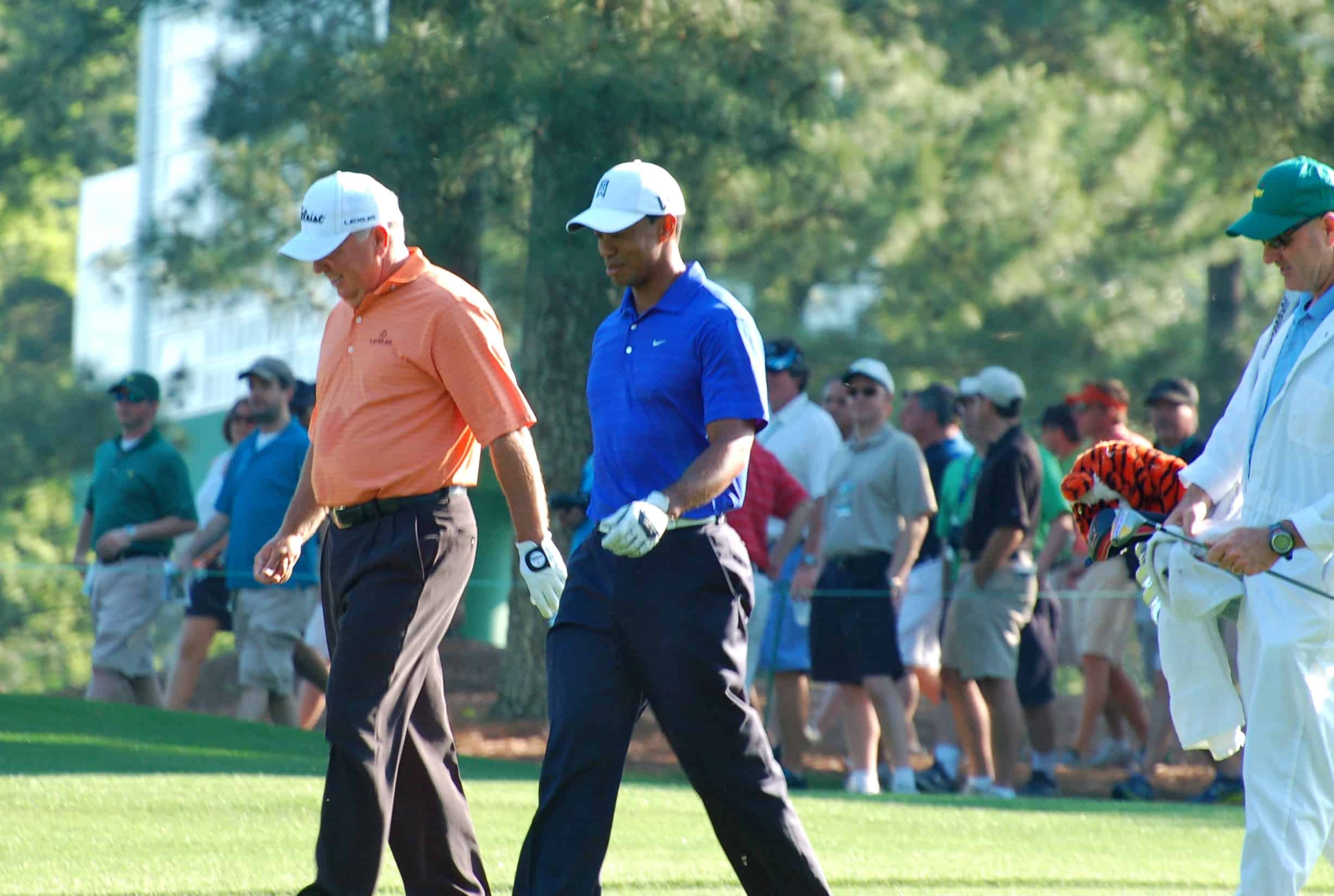
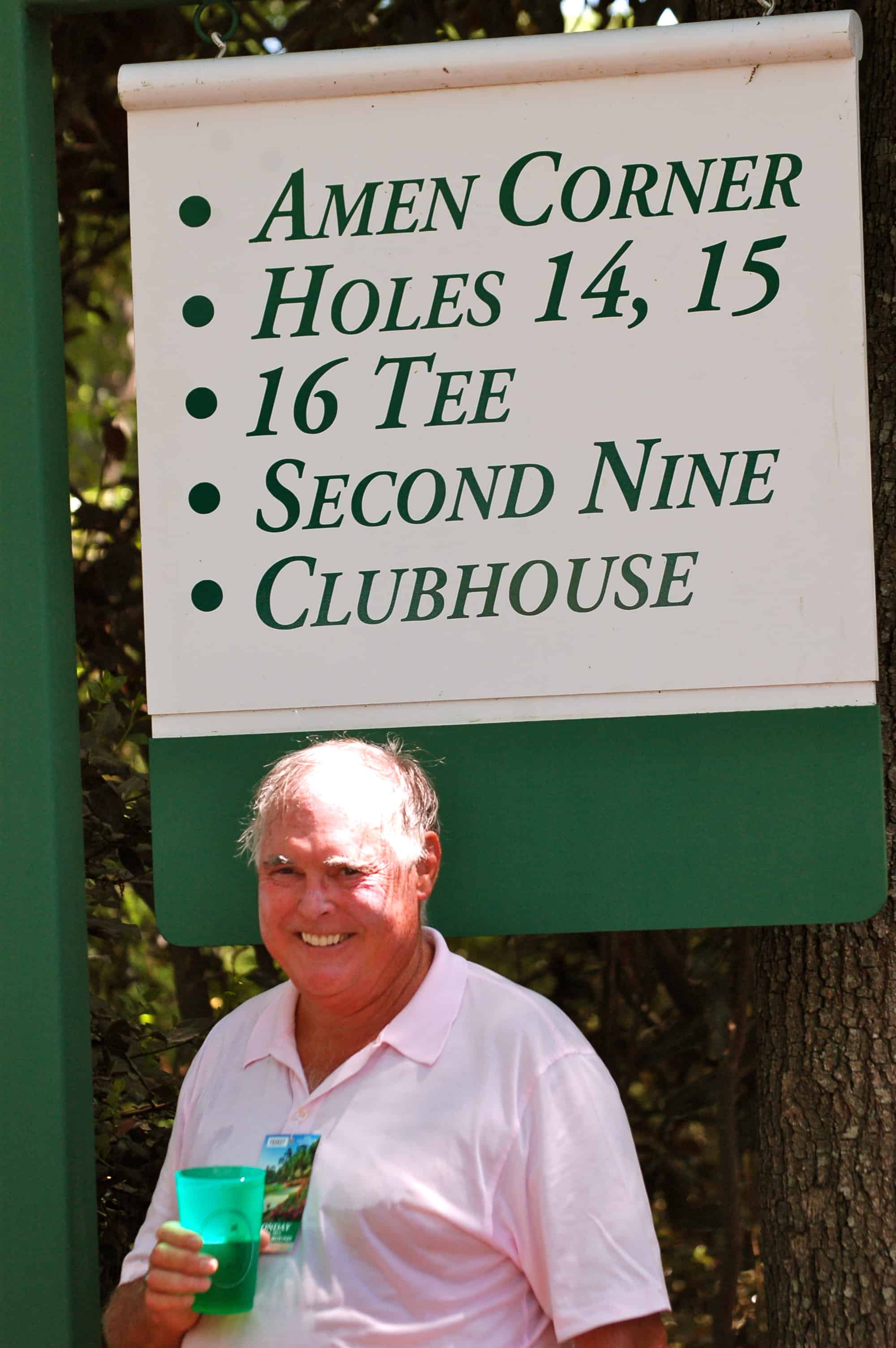
Inside the gate, the beauty everywhere was a thrill. We made our way down to Amen Corner and climbed up to the 15th fairway, where we found Mark O'Meara and Tiger Woods getting ready for their second shots into 15. Mark laid up. Tiger put it on the green. Then Tiger dropped a ball back beside Mark's first one to try the layup himself, and both players hit the next shot in.
Thinking the best way to see the course was to walk it from the start, we headed over to the first hole. The ninth is right next to the first, so we watched Tom Watson hit his ball into 9.
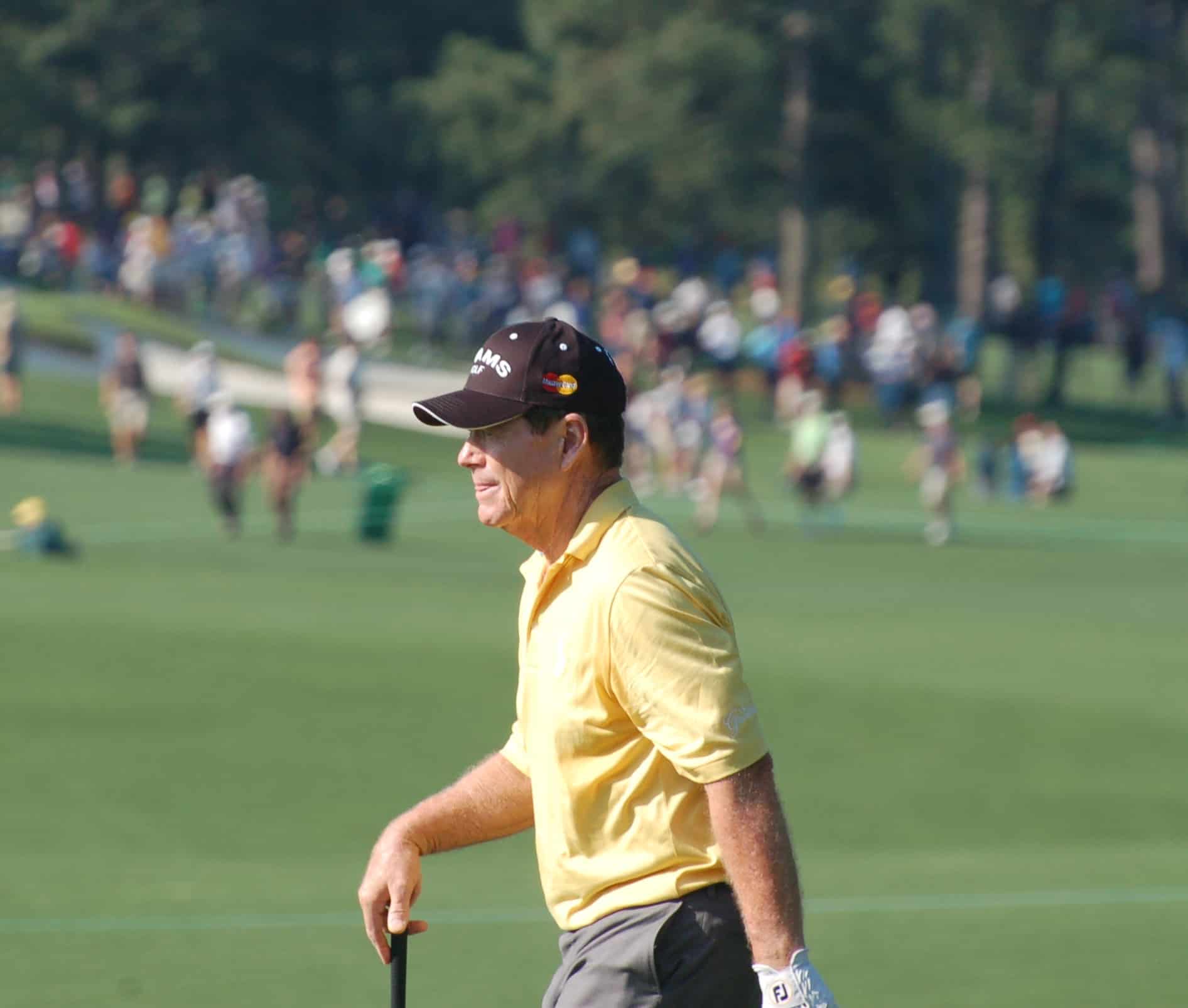
Watching him walk up to the green, you get a real appreciation for how tiring this course is on foot. Up and down, up and down. Walking the first hole and then back down the second drove home the elevation changes. The only flat ground on the course is the tee boxes. Every lie seems to be uphill, downhill, sidehill, or just hard. We caught up with a lot of the golfers, but the course was the show.
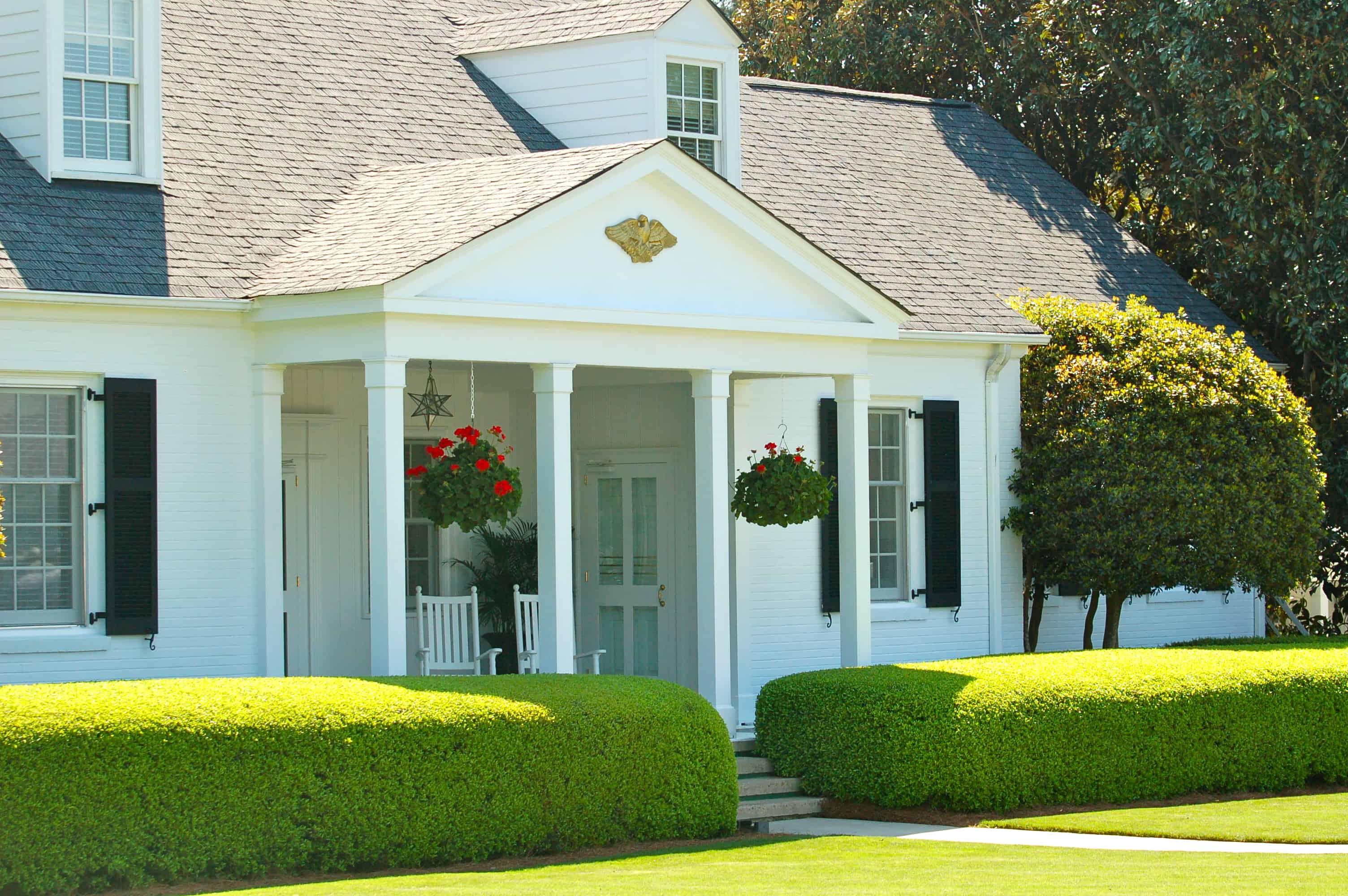
We strolled past the clubhouse and the Eisenhower Cabin, built in the early 1950s after Dwight D. Eisenhower's election. The Secret Service provided the specifications and it was built to protect the President and Mrs. Eisenhower during their visits. Still beautiful. Rory McIlroy stayed there during a 2010 visit and was surprised how large the three-story, six-or-seven-bedroom home turned out to be.
Lunch. The concessions are part of the legend. When was the last time you saw an egg salad sandwich for $1.50 and an imported beer for $3.75? The plastic cups are collectibles, so naturally we ended up with six new cups for the Roadtrek.
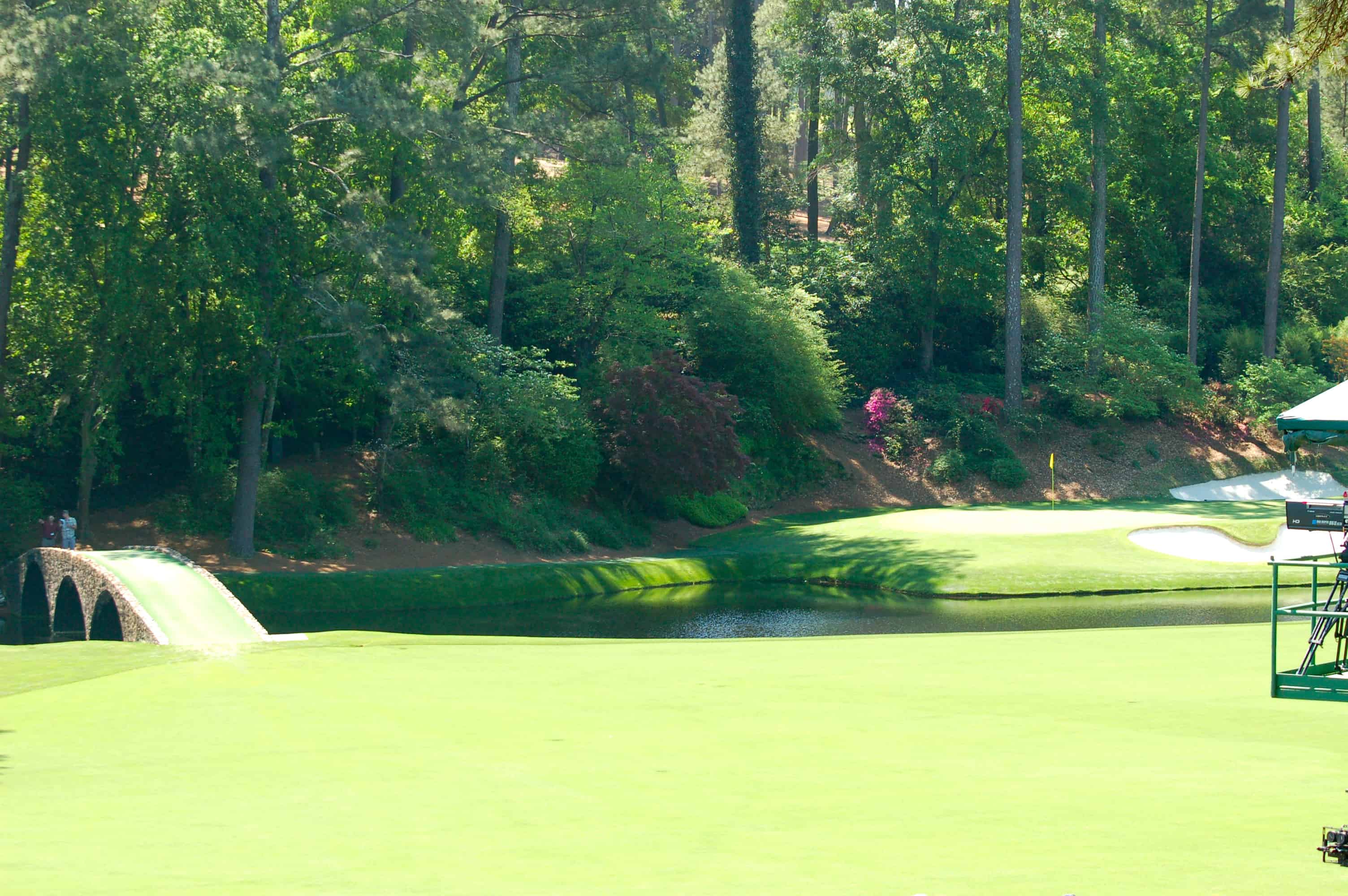
We took lunch up to the stands looking over the par-3 12th and the Hogan Bridge. The temperature was around 90 degrees and the stands were a hot box.
We kept walking and ended up in the stands overlooking the 15th green and the par-3 16th.
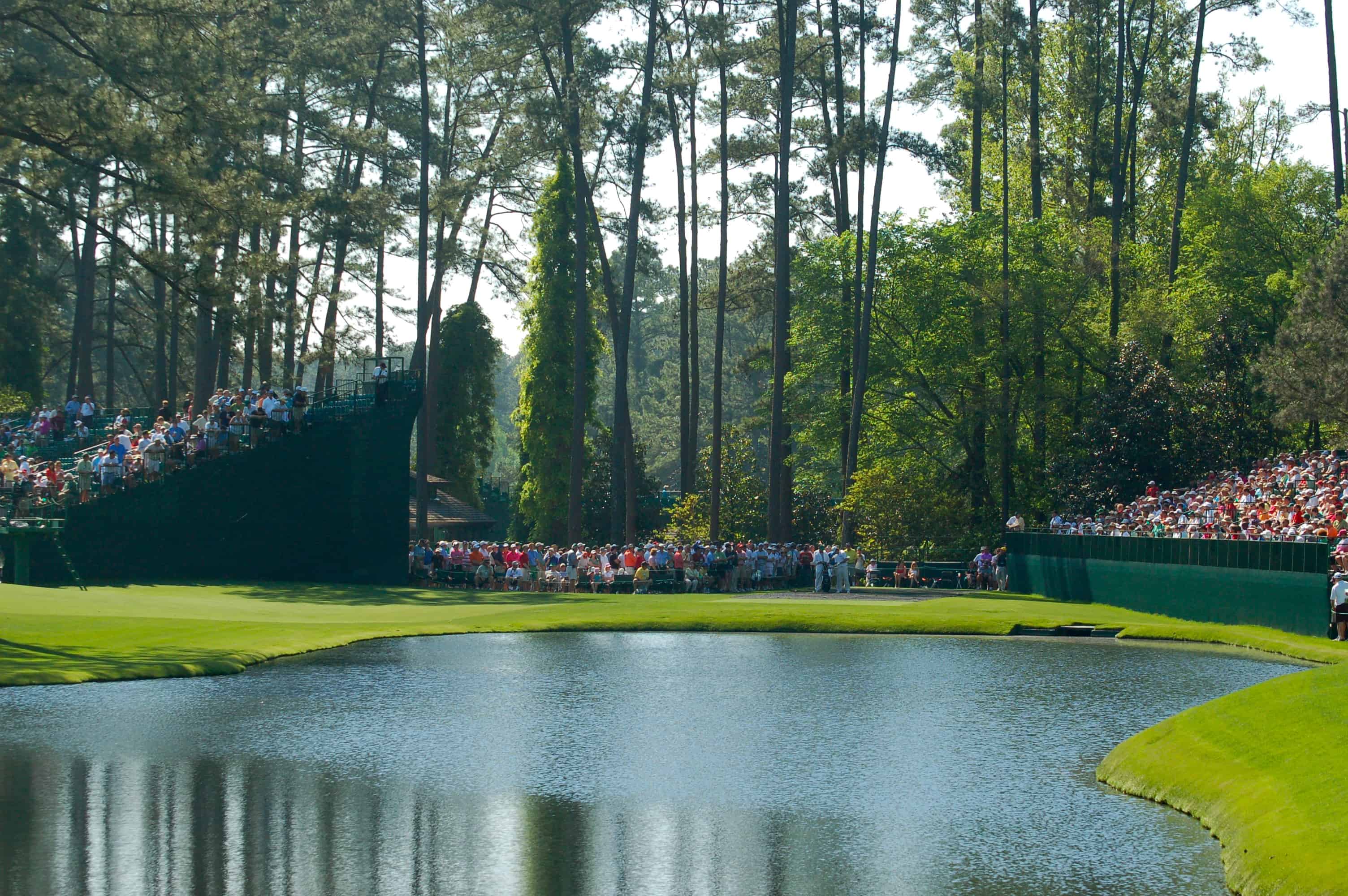
Part of the fun of practice rounds is the 16th hole tradition: players drop a ball at the edge of the water and try to skip it across the surface up onto the green. The cheers when one of them pulls it off sound like a hole-in-one.
Having walked the whole course, it was time to call it a day. The legs were sore. The day will be remembered for years. Watching the Masters on TV will be a different experience now.
One small thing nagged. The IBM tradition during Janice's years had been that some of the team got to play the course after the tournament. Some did. Janice did not. The walk this Monday around all 18 holes was, in its way, the closest she had gotten. Maybe one day.
Stay tuned as we start our spring and summer of Roadtreking. Next is the Alabama golf trail. Twelve courses, with our friends from the Alaska adventure, Pete and Bunny, joining us in May.