Dateline July 12, 2012, Arriving in Newfoundland and Cape Saint Mary's
We arrived at the ferry terminal in North Sydney for the trip to Newfoundland and were amazed by the size of the ships. The vessel was around 650 feet long, ten decks tall.
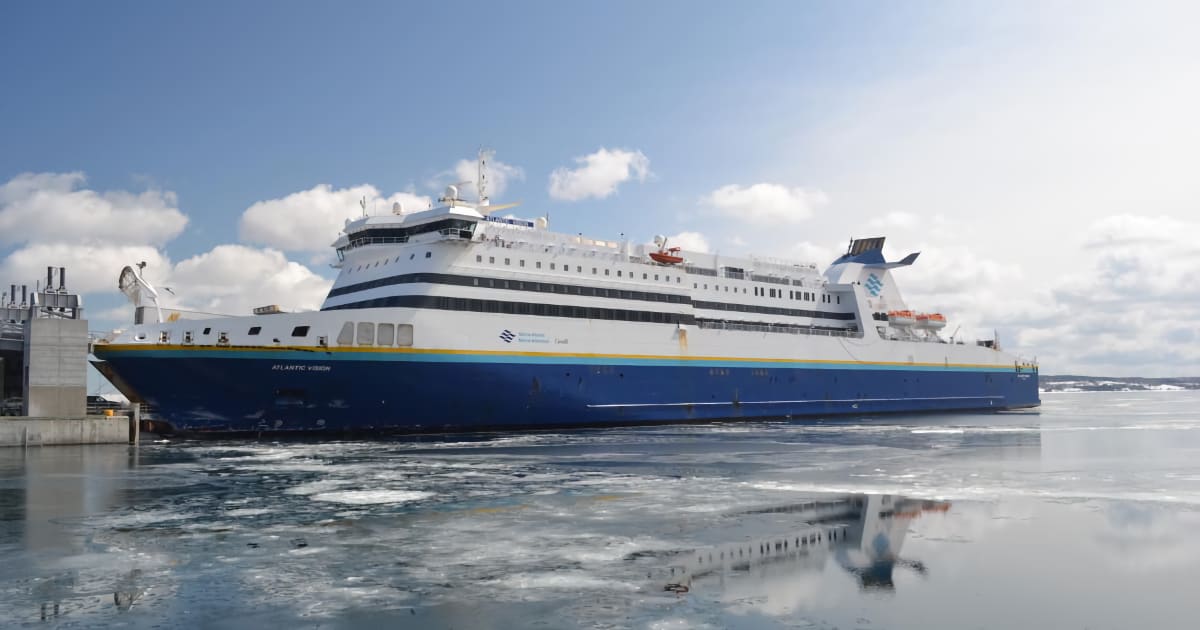
The inside was set up like a cruise ship, which we were thankful for: the crossing runs about 15 hours, leaving North Sydney around 6:30 PM and arriving around 10:00 the next morning in Argentia, Newfoundland, a town about two hours from St. John's. Our cabin had two bunk beds. Janice figured out how to flip the top bunk up so we would not crack our heads on it at night. The beds leaned a little, but we slept well until about 6:30 AM. An easy crossing, on schedule.
At the info center on the Newfoundland side, we got all the local information for the St. John's area. The recommendation we kept hearing was the Cape Saint Mary's Ecological Reserve, at the southwest tip of the Avalon Peninsula, surrounded on three sides by the open Atlantic. It was described as one of the most spectacular, and most accessible, seabird colonies in North America. For over a century, the staff at the info center told us, naturalists and wildlife lovers have made the trip out: 70,000 seabirds in one place, and whales sometimes visible from the cliffs.
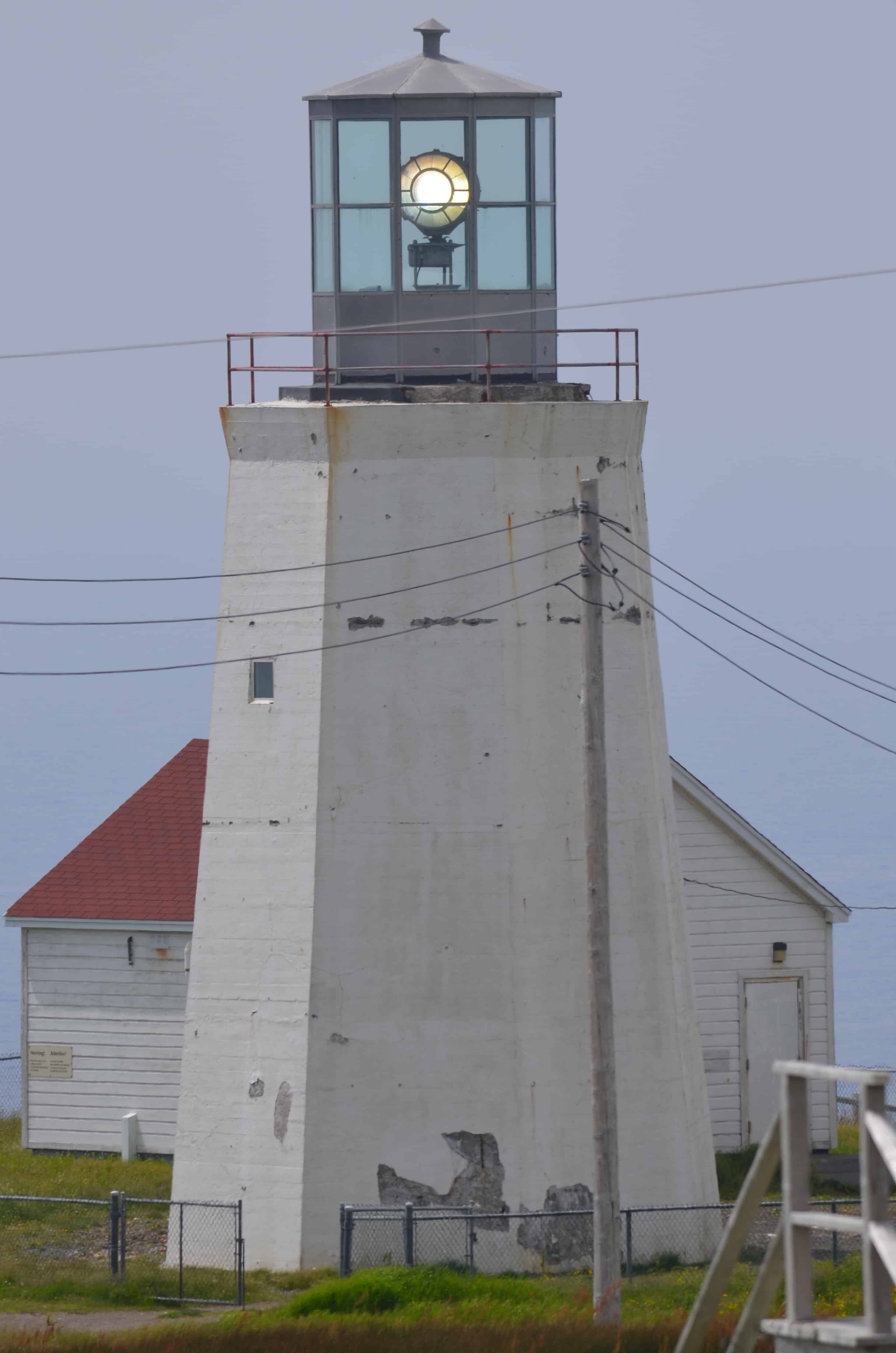
The drive south was a good 90 minutes, and as we got closer we began wondering whether this had been a good call. We arrived in dense fog. You could not see the lighthouse across the road. You could certainly hear the fog horn. We were nearly ready to turn around and chalk it up to a bad day. Instead we went into the interpretive center to ask. The ranger said: change your shoes, flip-flops will not do, walk the mile out the rocky path to the colony, and the fog will lift before you get there. Back to the RV, real shoes on, and out the path. Every few hundred feet we would step toward the edge of the cliff to see what we could. Nothing but fog.
We finally got to the end, and it was worth the entire trip.
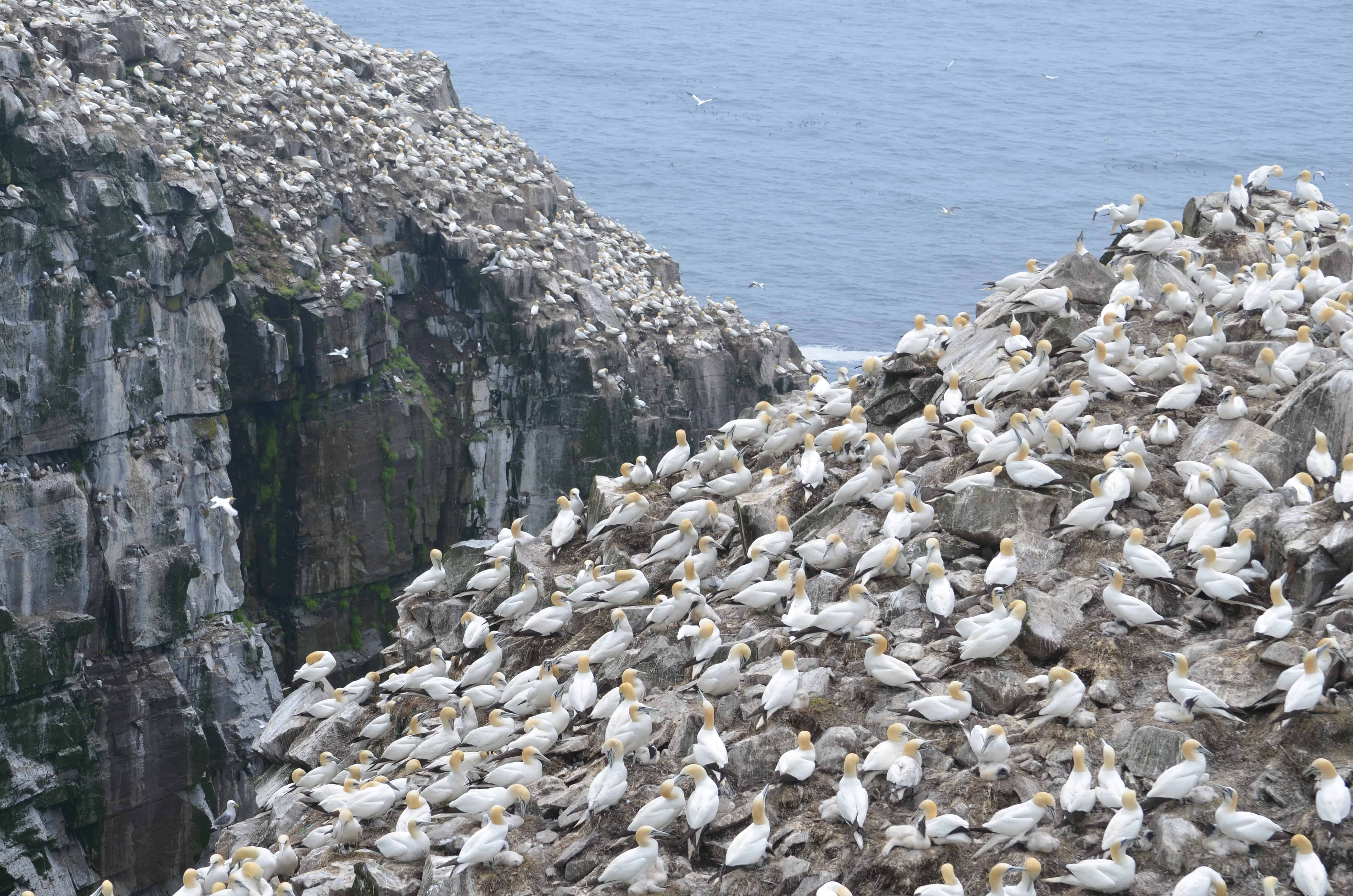
Thousands of birds, some on nests with eggs, some with chicks already hatched, others coming and going from the food run. We identified three species.
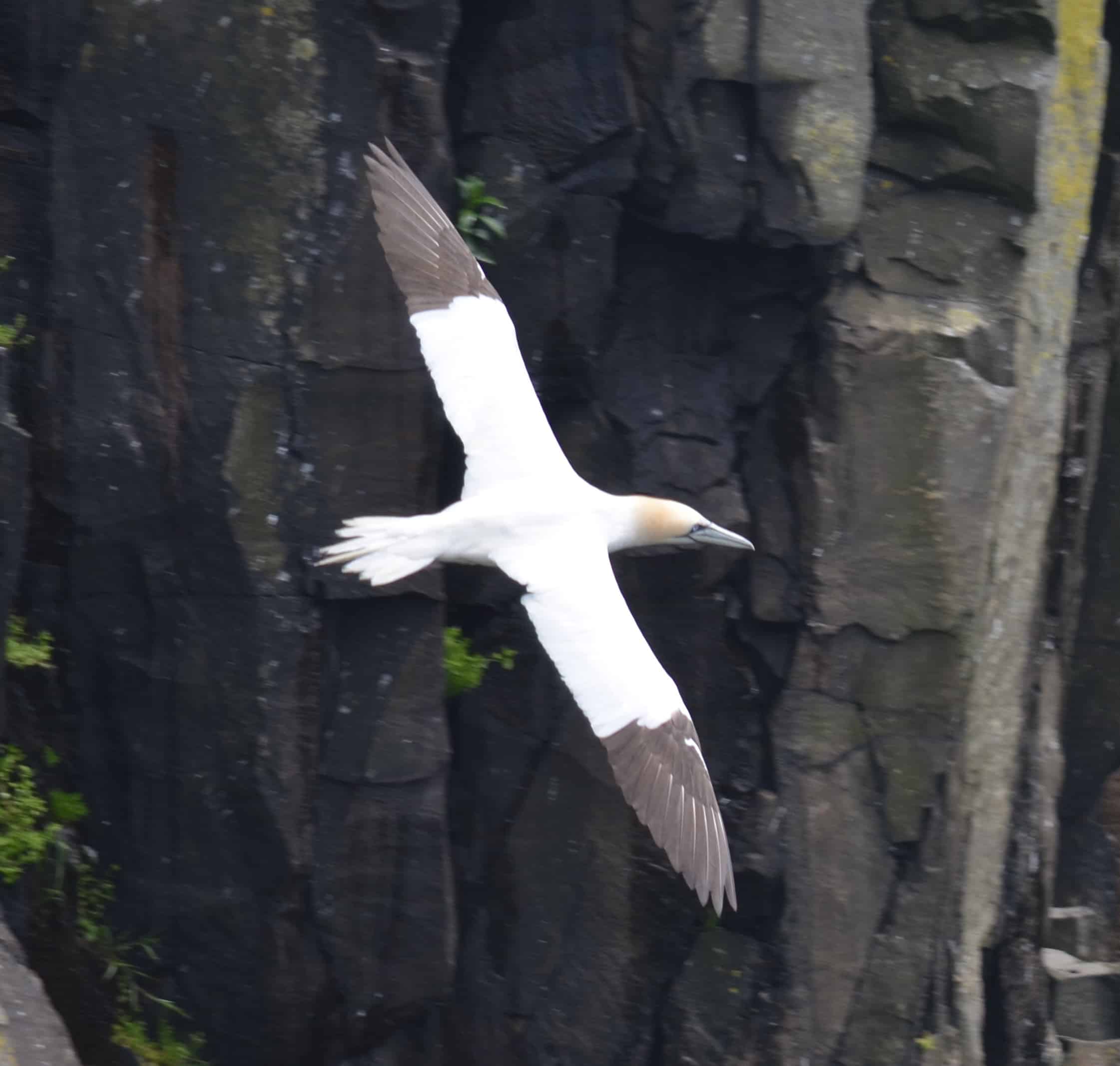
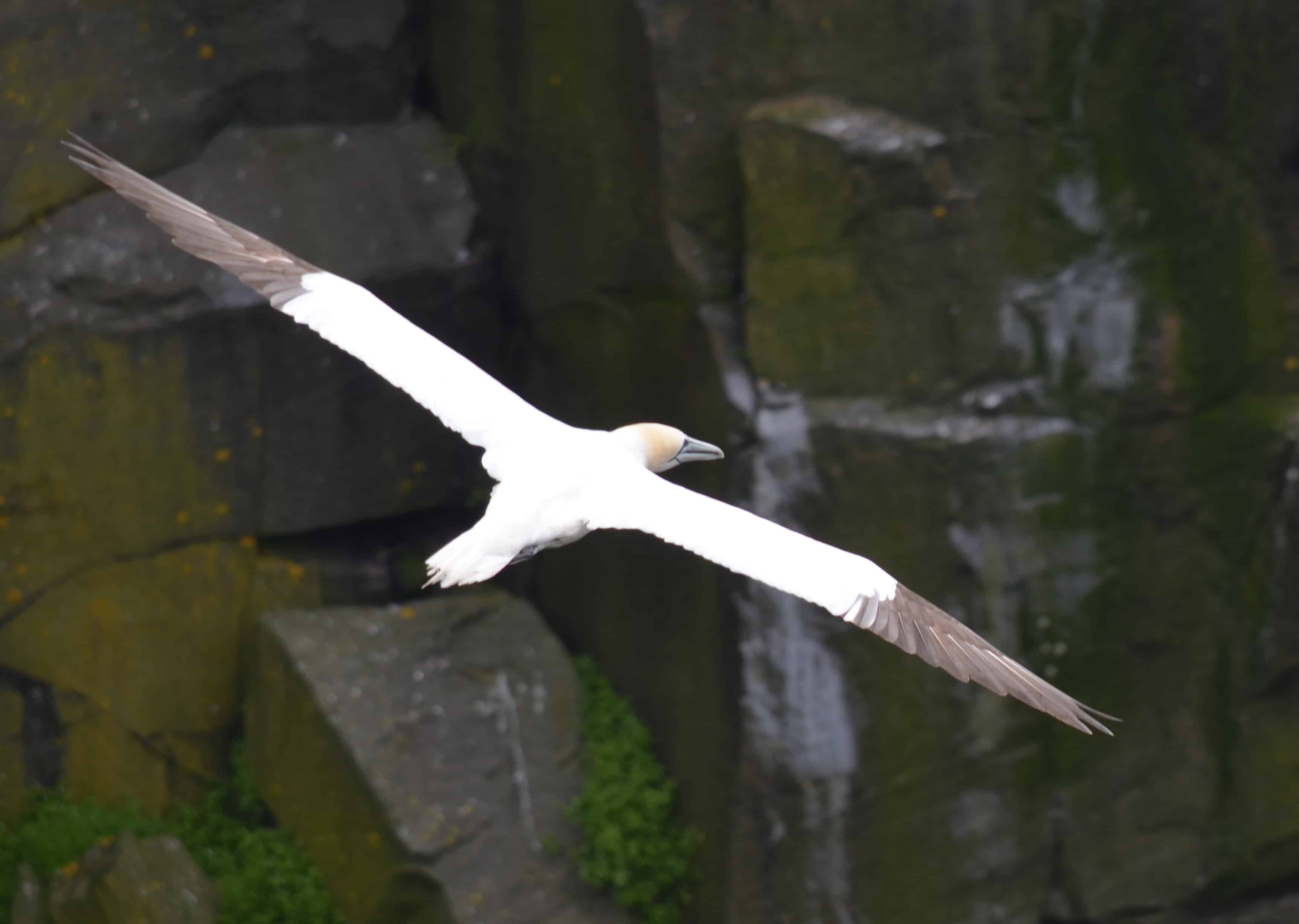
Most of the nesting birds were Northern Gannets. Gannet pairs sometimes remain together over multiple seasons. They have elaborate greeting rituals at the nest, stretching their bills and necks skyward and gently tapping bills together. The gannet is a spectacular diver, plunging into the ocean at high speed with its body straightened like an arrow before striking the water. A gannet that catches a fish swallows it underwater before resurfacing. They are strong fliers but clumsy on takeoffs and landings. The wingspan can reach six feet.
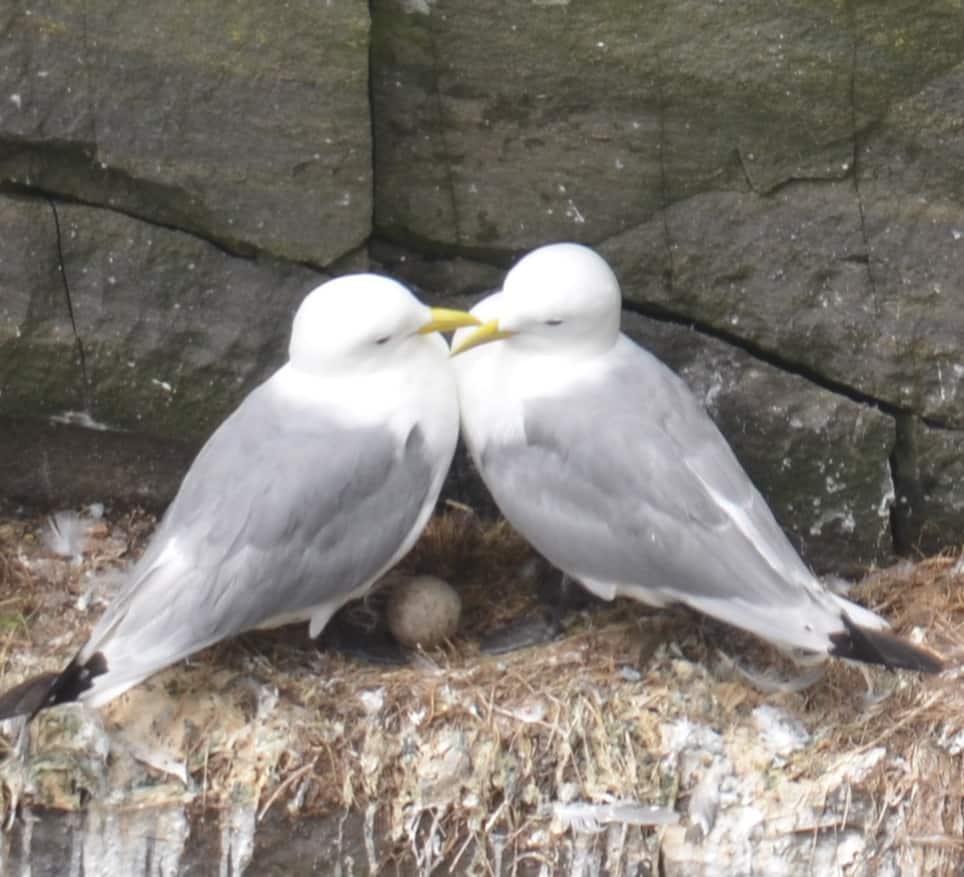
The Black-Legged Kittiwake is a small gull. They also seemed to have a greeting ritual when a mate returned to the nest.
The third species was the Common Murre, a member of the auk family. Unlike penguins, modern auks can fly, and they are good swimmers and divers. Their walking, on the other hand, is clumsy.
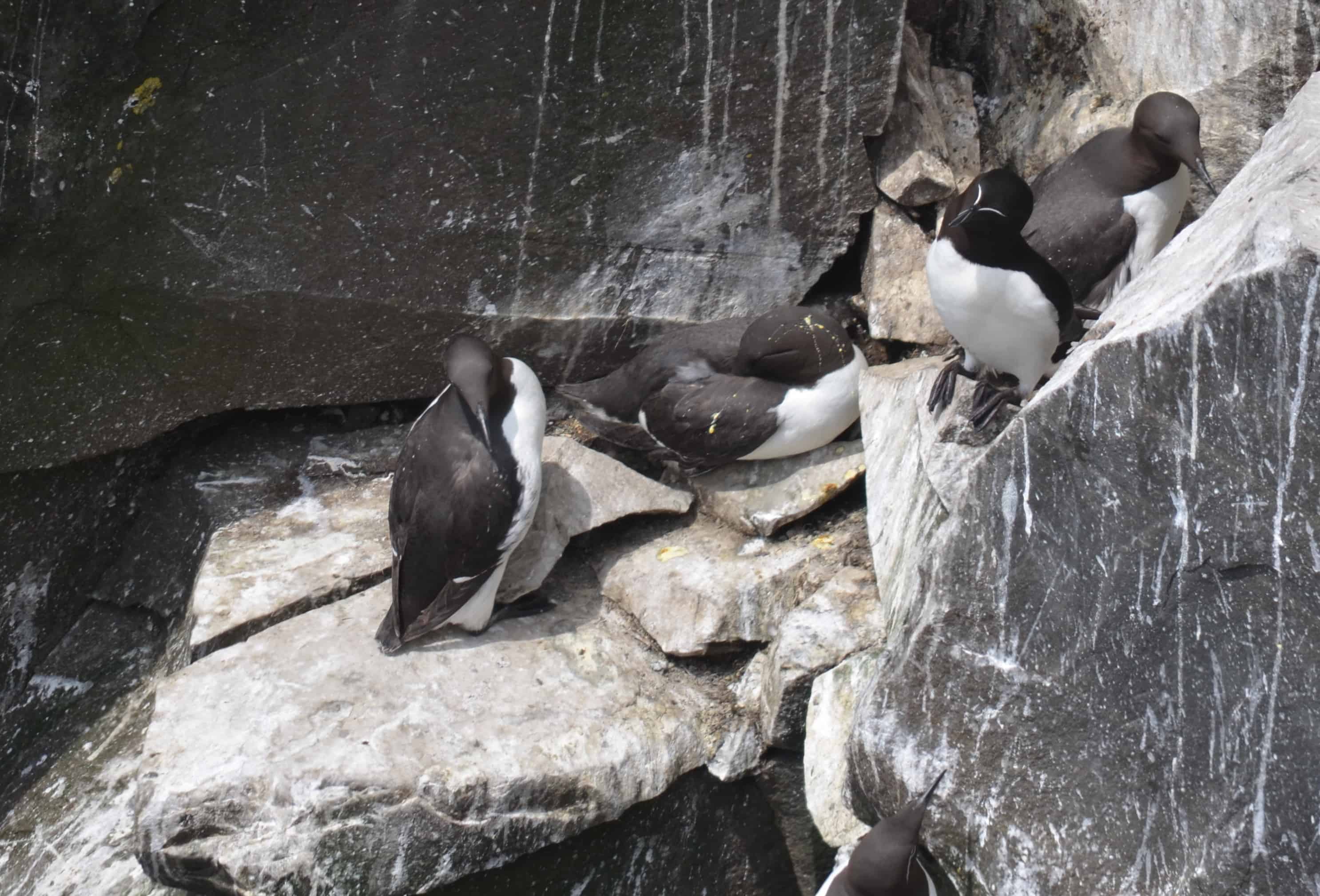
The pictures say it all. We were so absorbed in the birds we never looked for whales out in the open water.
On the walk back, the fog had lifted, and we could finally see the lighthouse.