Dateline July 4, 2013, Yellowstone National Park
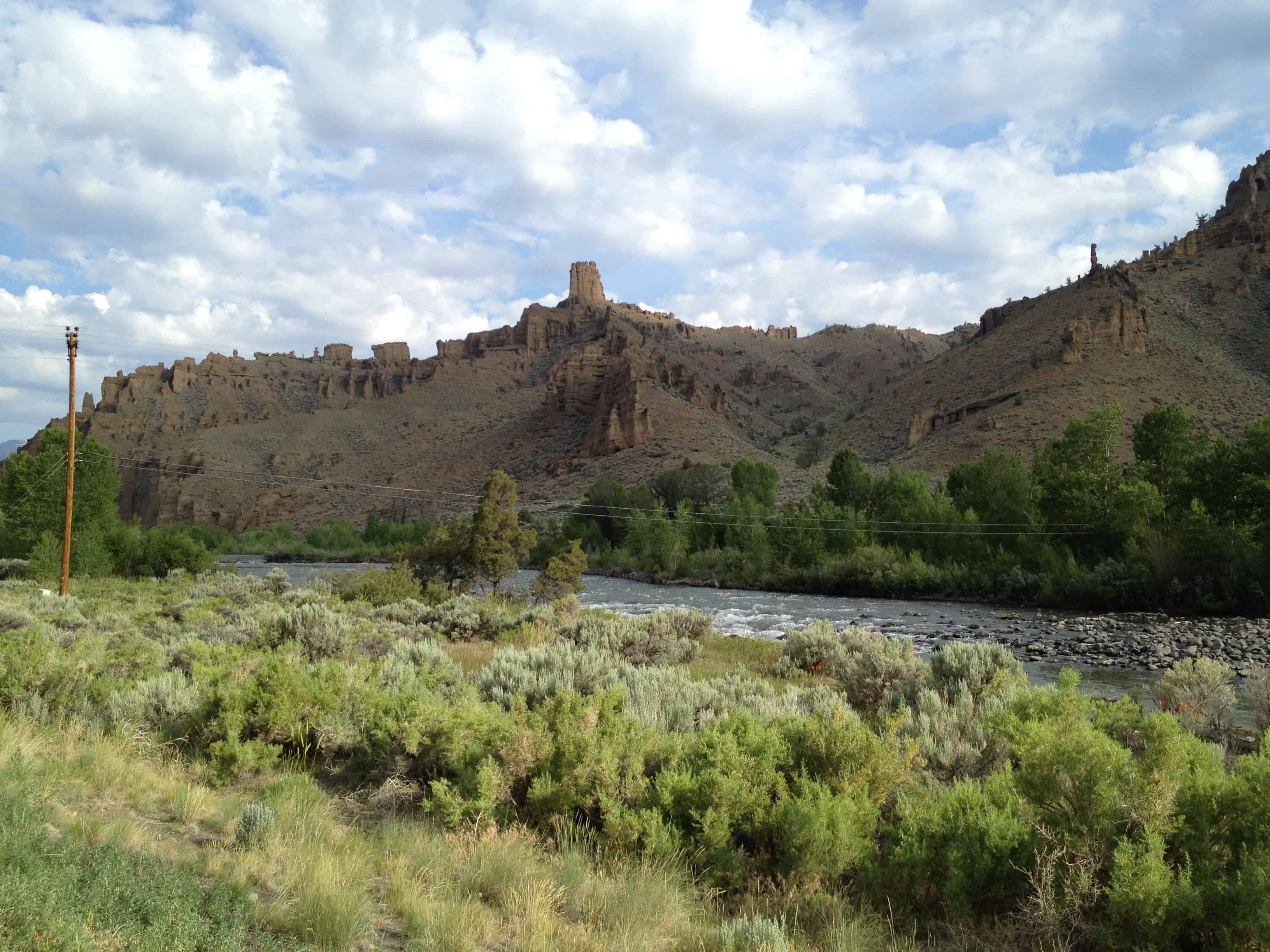
We made an early departure from Cody for the short drive to Yellowstone. The road passes through Shoshone National Forest, with views of the river winding south back toward Cody. Before long we were at the eastern entrance to the park.
Much of the drive in runs along Yellowstone Lake. There are hot pools along the shoreline with sulfur-smelling steam rising into the air.
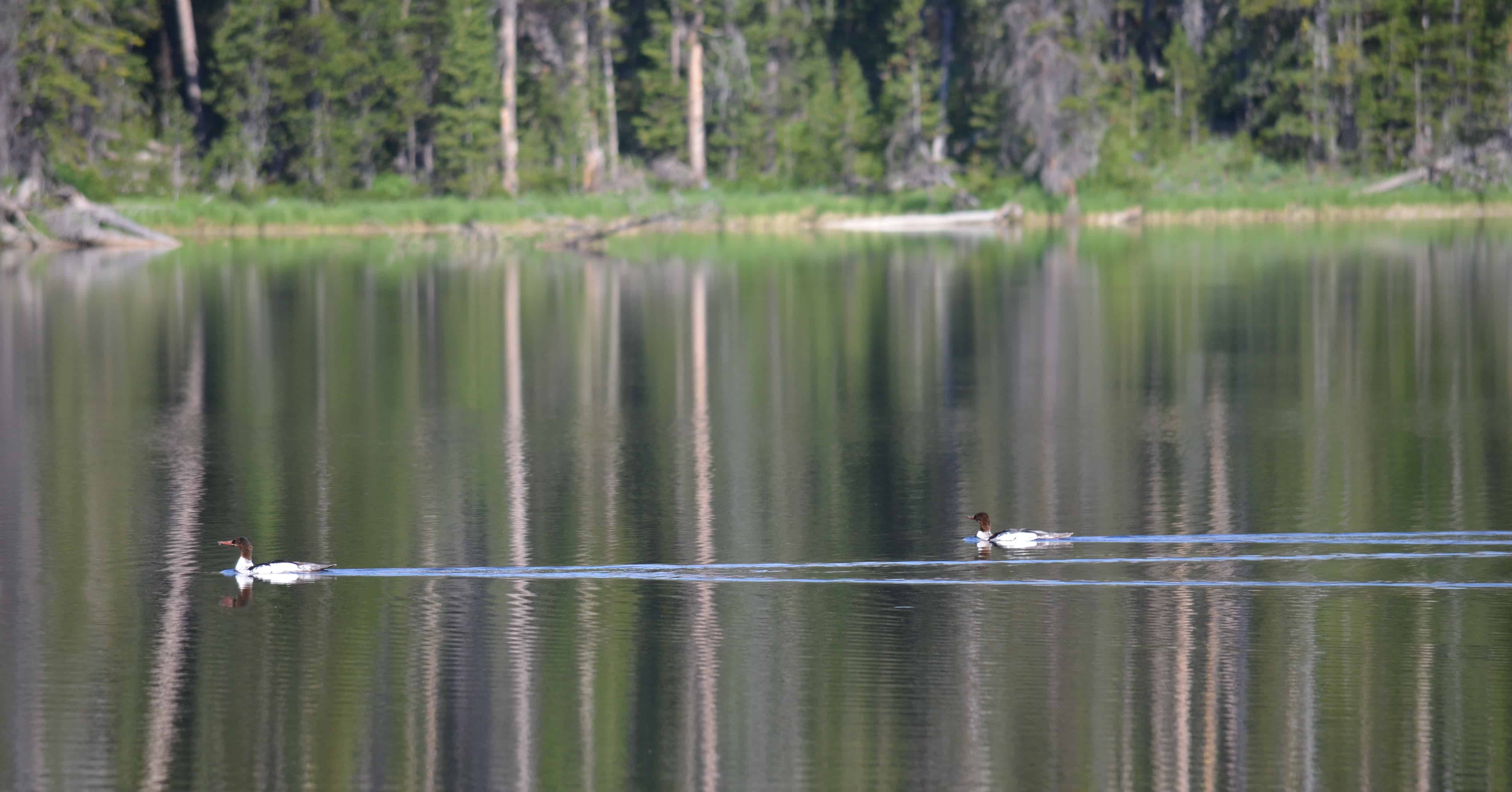
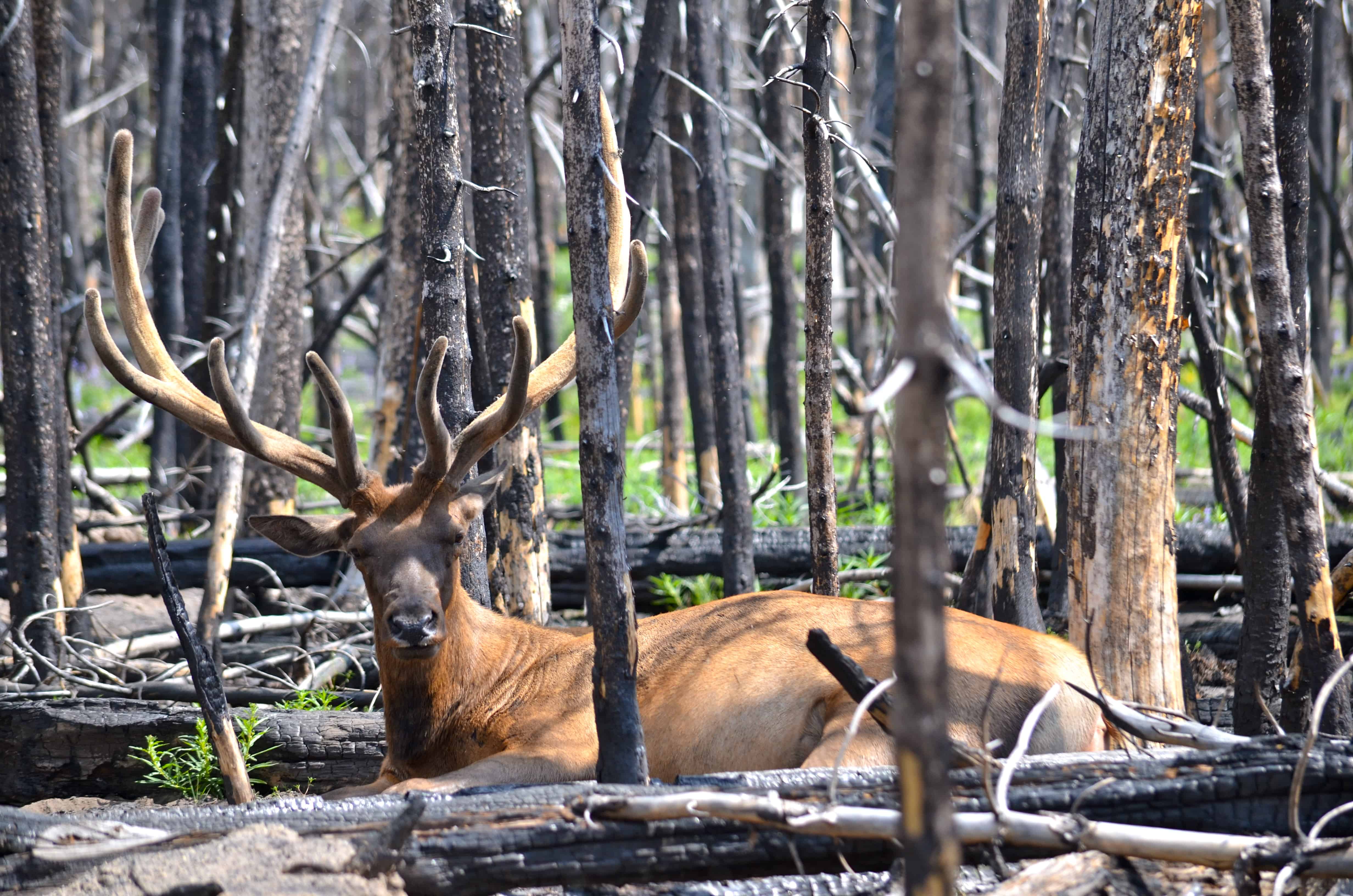
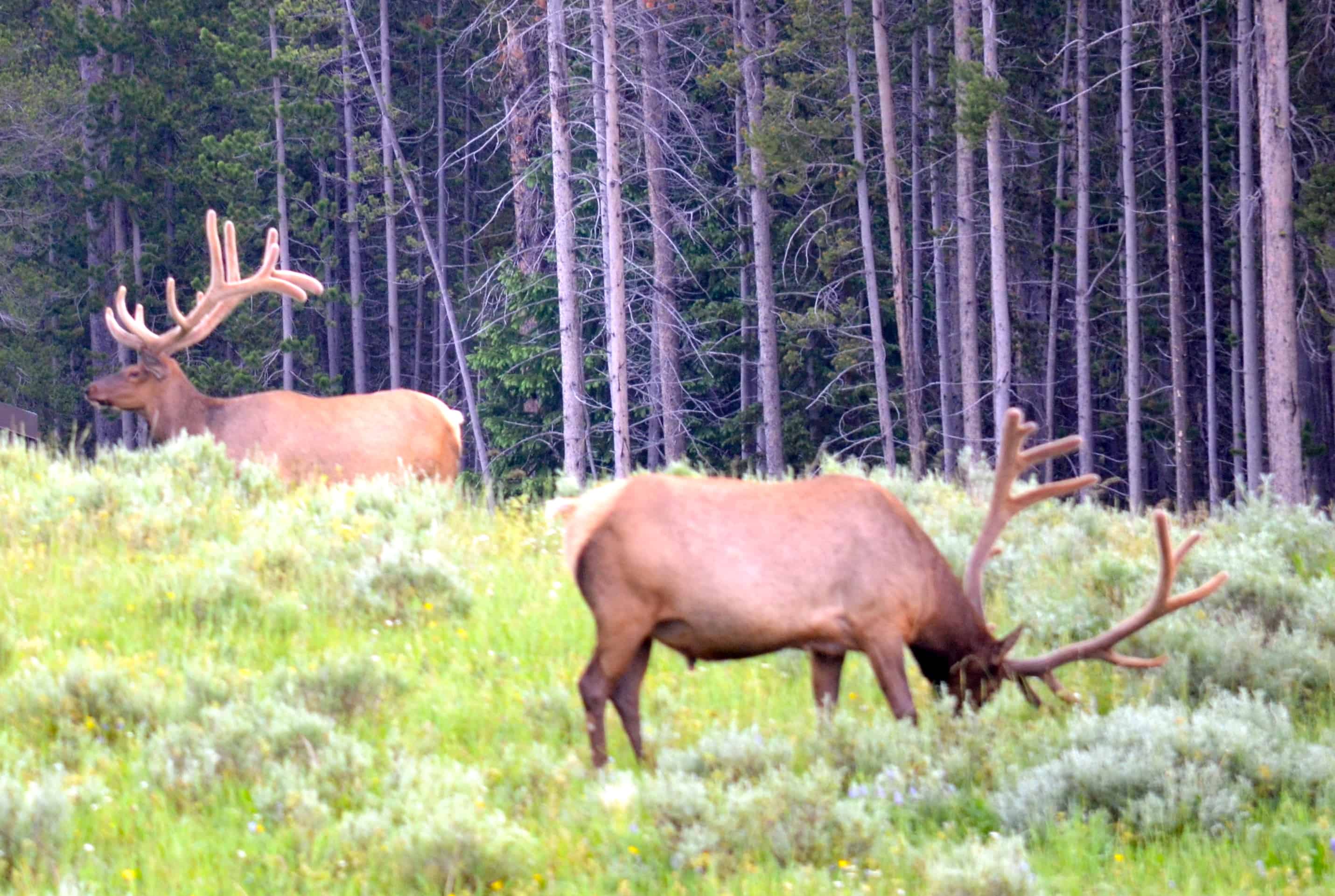
One roadside sign noted that the water temperatures at the surface of the lake can cause hypothermia within minutes, while at the bottom the temperature in some places exceeds 200 degrees. The thermal physics of Yellowstone are like nowhere else. We passed a small backup of cars and stopped to see what they were looking at: a beautiful elk lying in the trees.
We drove on the next thirty miles to our campsite a few hundred feet from Yellowstone Lake. After checking in, we set off on the southern loop. The views with the lake and the mountains behind it were stunning. The road took us to Old Faithful. We arrived just as an eruption was ending, which gave us about ninety minutes until the next one.
The Old Faithful visitor center has a short film about the geology of the park, very good for the time invested. The Yellowstone Plateau sits on top of one of the largest volcanic systems on Earth. There have been three massive eruptions over the last 2.1 million years, with the most recent about 640,000 years ago. Each of them produced an enormous collapsed crater called a caldera, and it is these calderas, and the hot rock and water still working beneath them, that drive the geothermal features Yellowstone is famous for.
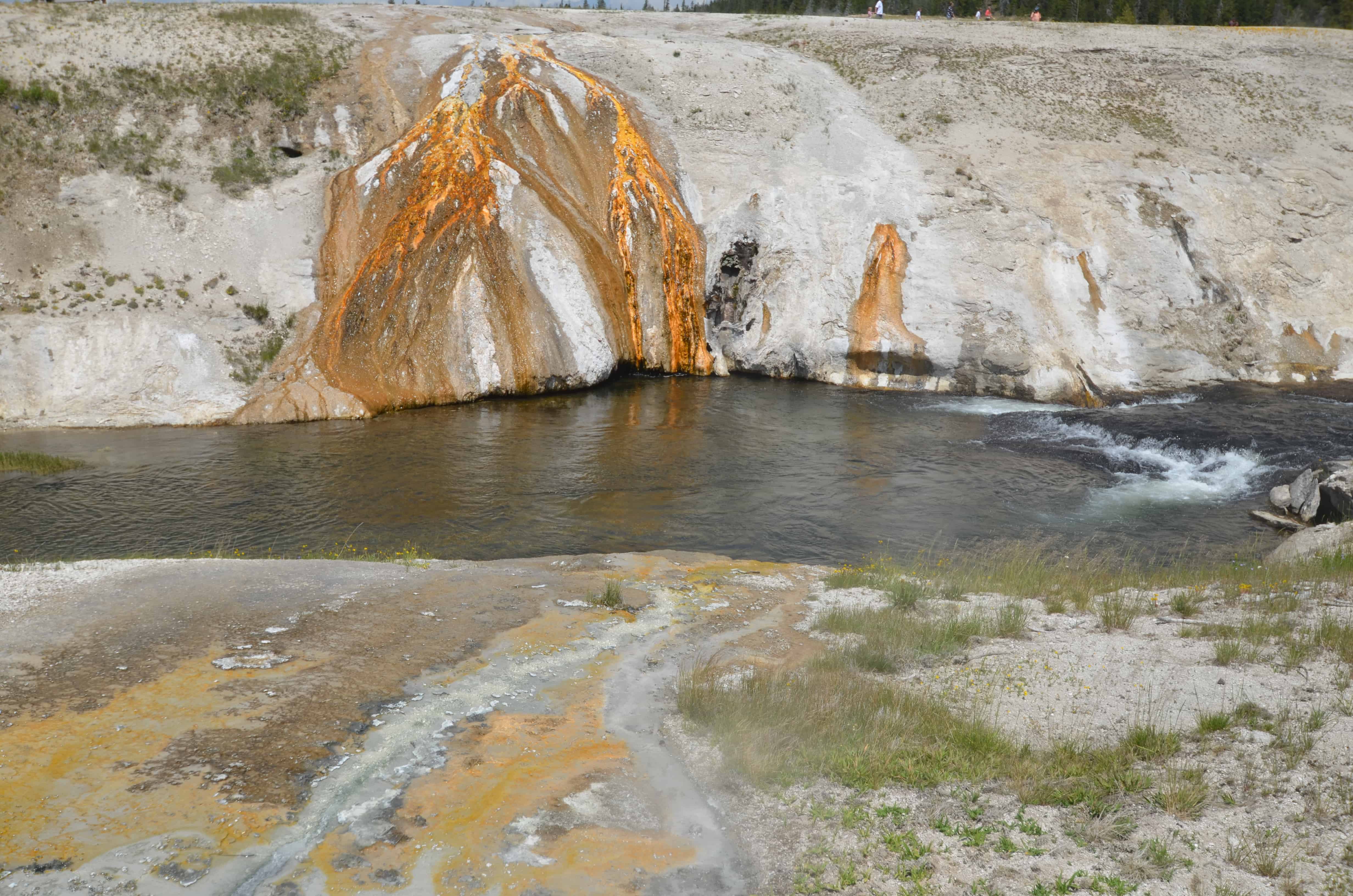
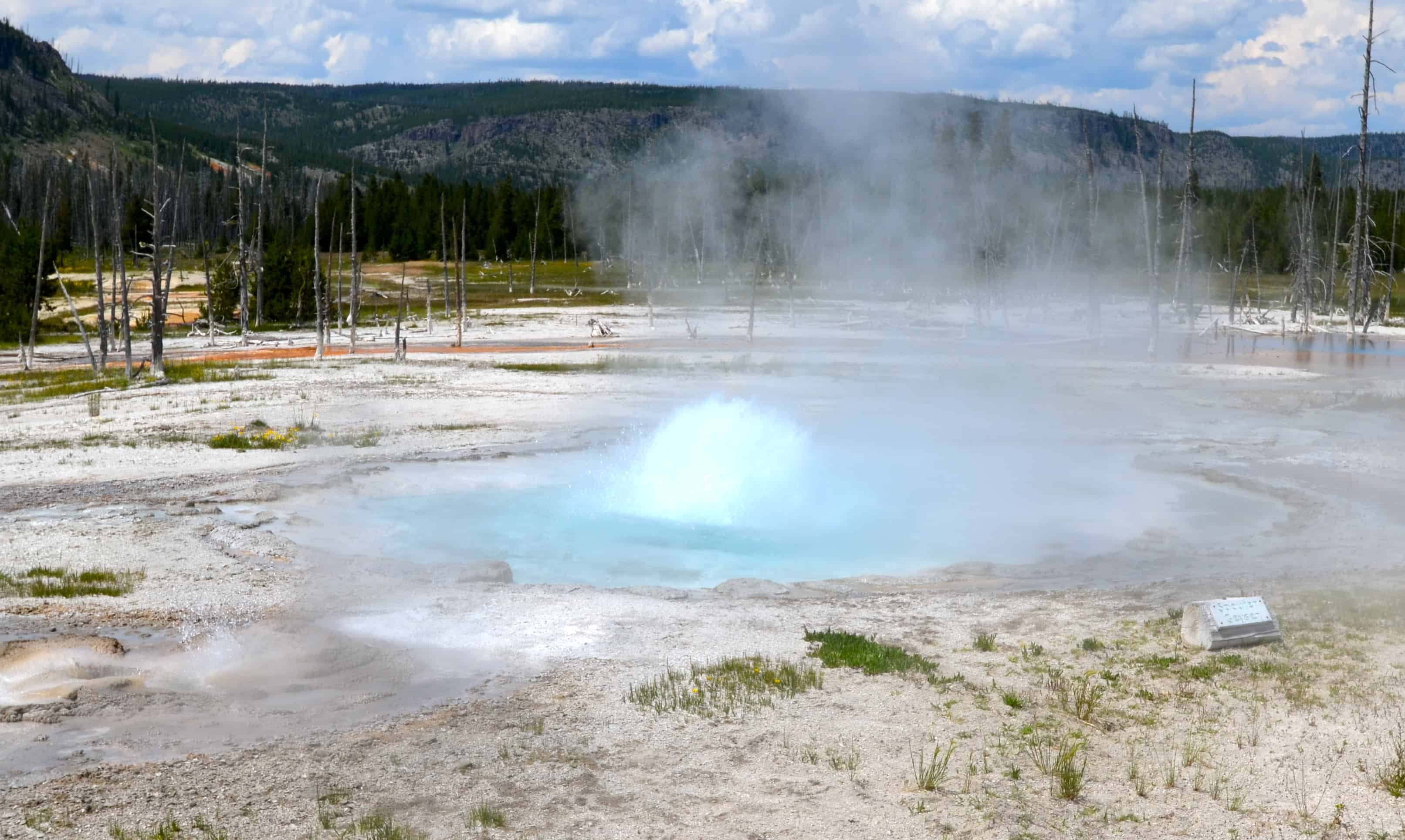
We then walked the loop around Old Faithful, looking at the various pools that erupt as smaller geysers several times a day. The colors on the rocks come from thermophilic bacteria that thrive at very specific temperatures, with different species making different bands of color as the water cools across the runoff. Many of the geysers and pools are spectacular in their own right. One pool we passed had clear blue water and magnificent surrounding color.
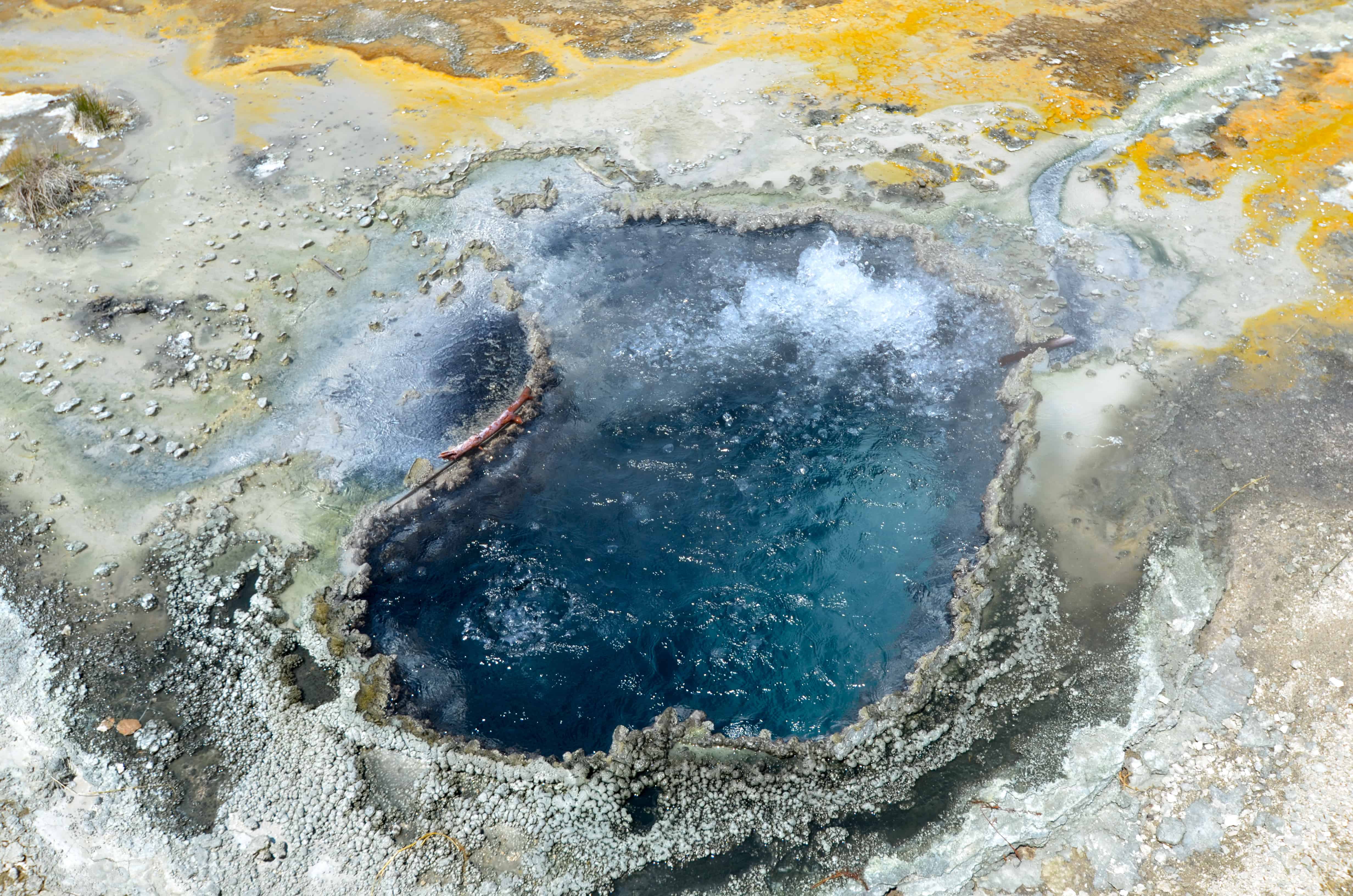
Without a published eruption schedule, we had no idea when any of the smaller ones would go. Later, while we sat waiting for the 2:12 PM eruption of Old Faithful, we saw several of them go off in the distance.
This is an experience everyone should have at least once. As the wait ticks down, the crowd builds around the central viewing area. What is astonishing is the number of foreign accents in earshot. Old Faithful is a world destination. The time of eruption is never exact, and the park gives a window of plus or minus ten minutes. Old Faithful loves to play the crowd. There are plenty of false starts, where everyone raises cameras only to put them back down. Then, finally, the geyser commits.
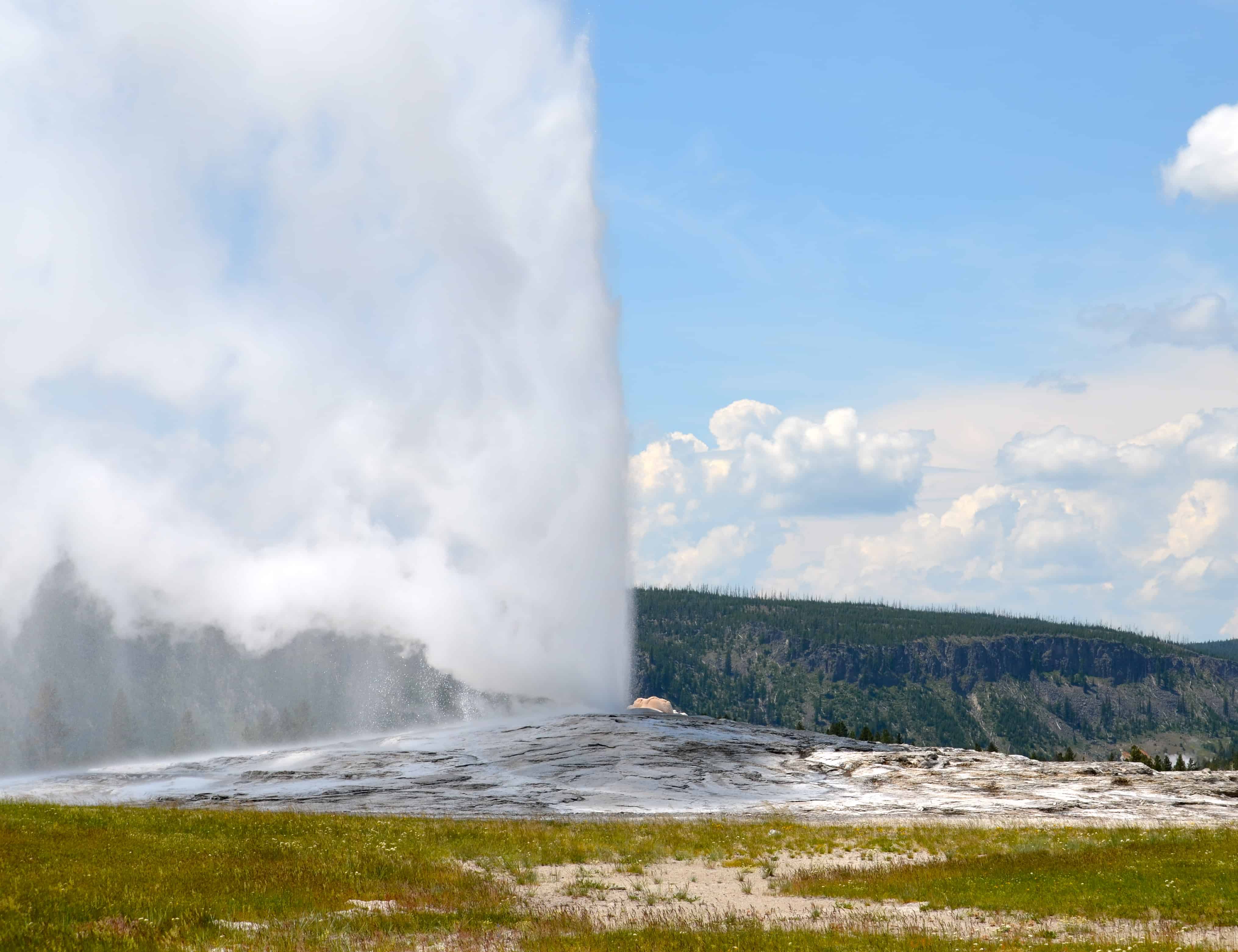
There is a video of the eruption on YouTube (here). The picture is worth a thousand words, the video may be worth ten.
We laughed afterward about how we needed to wait around for the next eruption so we could see it with our own eyes instead of through the lens. Sensational, and only one part of Yellowstone.
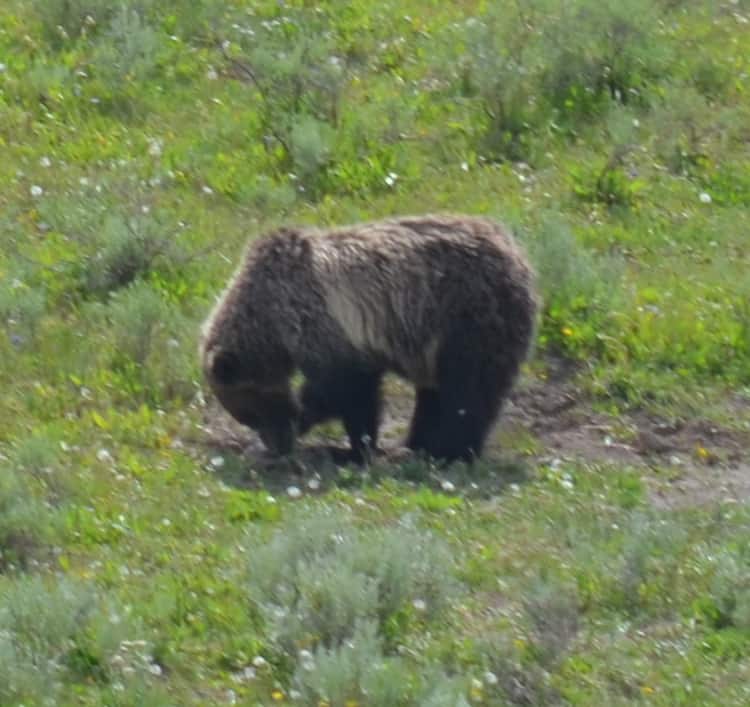
We continued the southern loop, astonished at the sheer beauty of the park. Another traffic backup, which usually means an animal photo opportunity. We negotiated through the cars, found a place to pull over, and there, off to the side, was a large grizzly. The only grizzly we saw the whole visit.
Back near our campsite that evening we stopped by the ranger station to ask the best time to see animals. Sunrise, came the answer. We set the alarm for 5:00.
God bless Janice. She let John sleep in the back while she drove the Roadtrek up to Hayden Valley, pulled over, and waited.
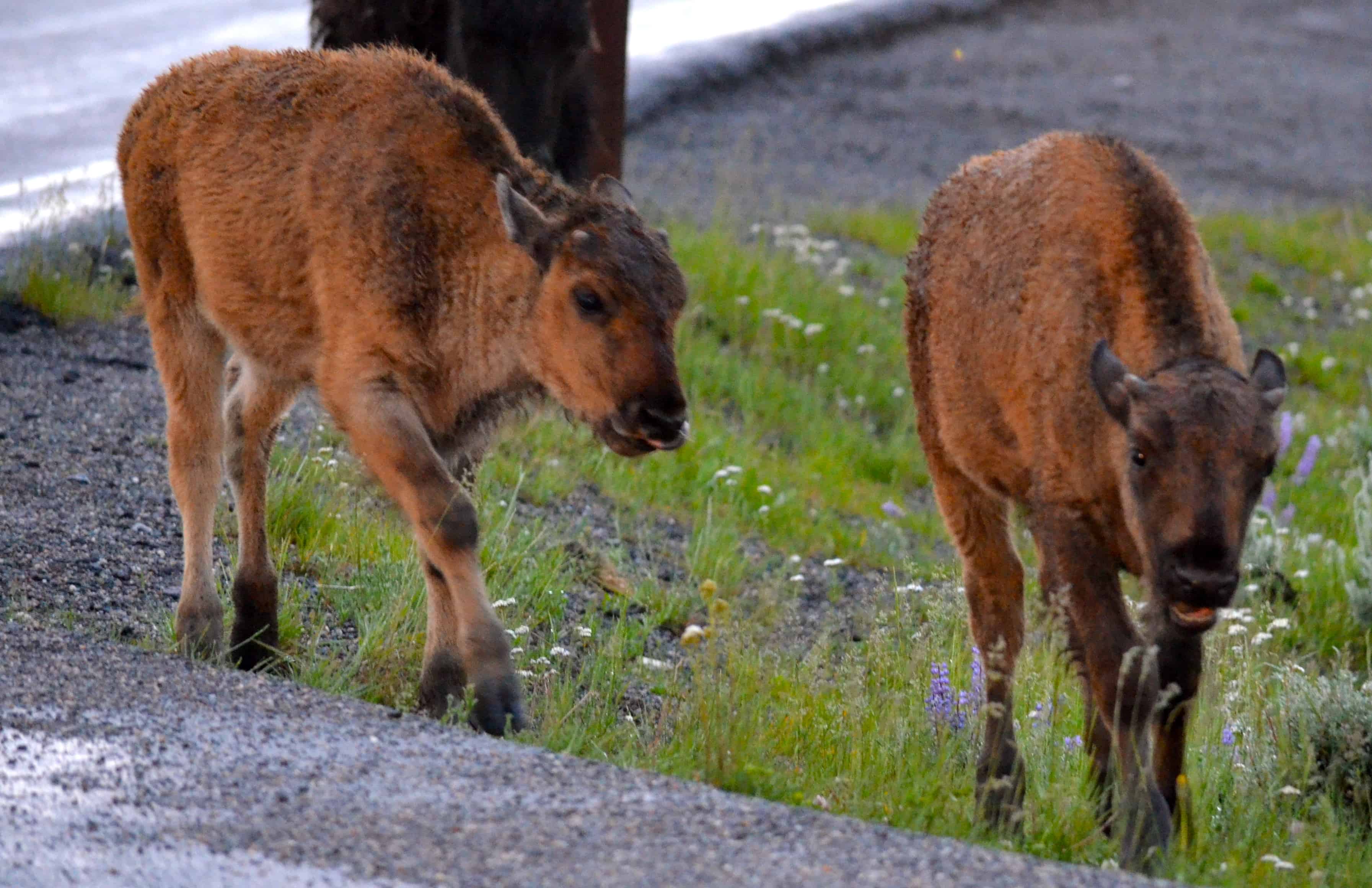
A herd of bison came up the road and along the side of the Roadtrek, only a few feet from the rig.
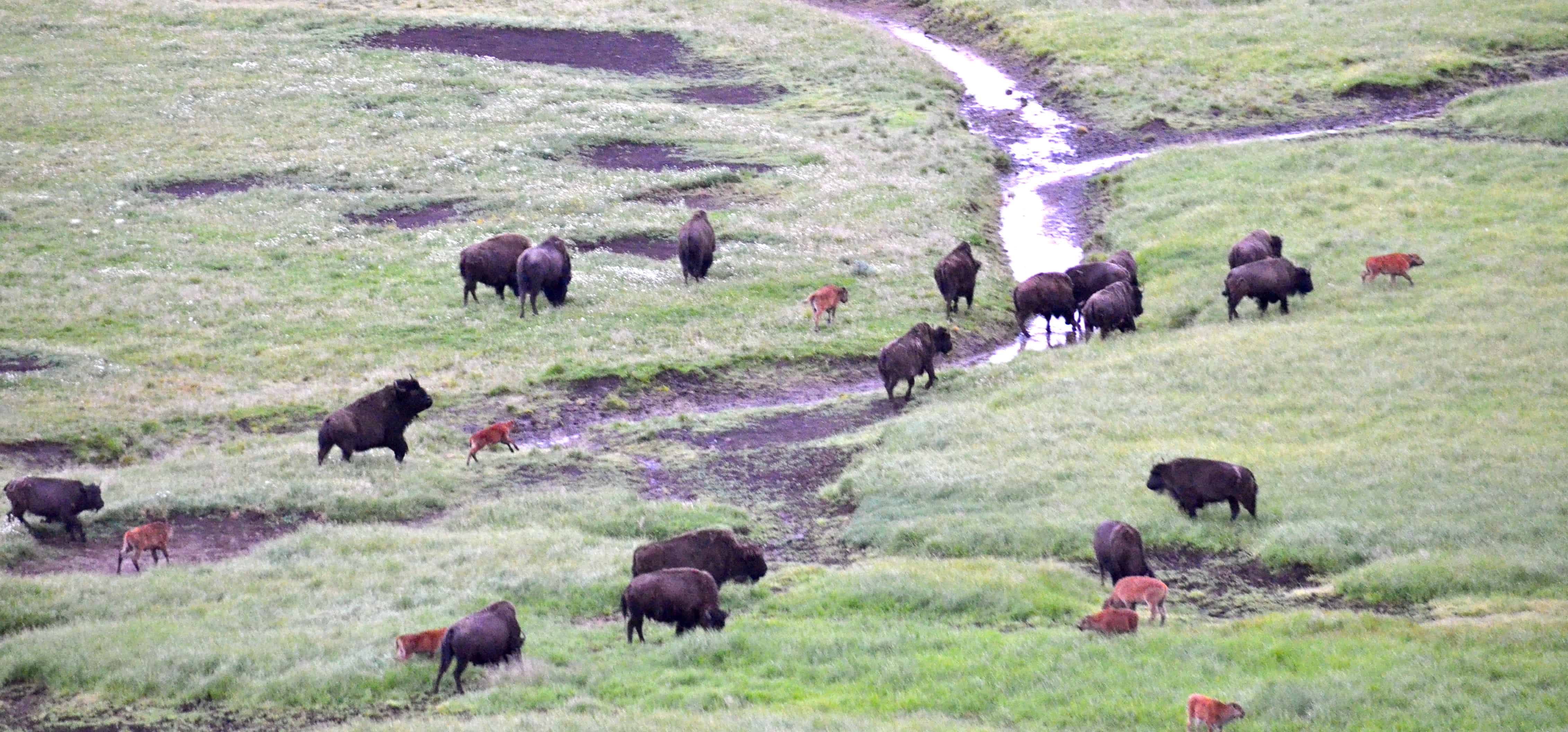
The calves had been born a little late this year, so we had close-up views of the babies walking alongside their mothers and within feet of our window. Sitting with coffee and tea watching that go by is just about the top of any travel experience we can name.
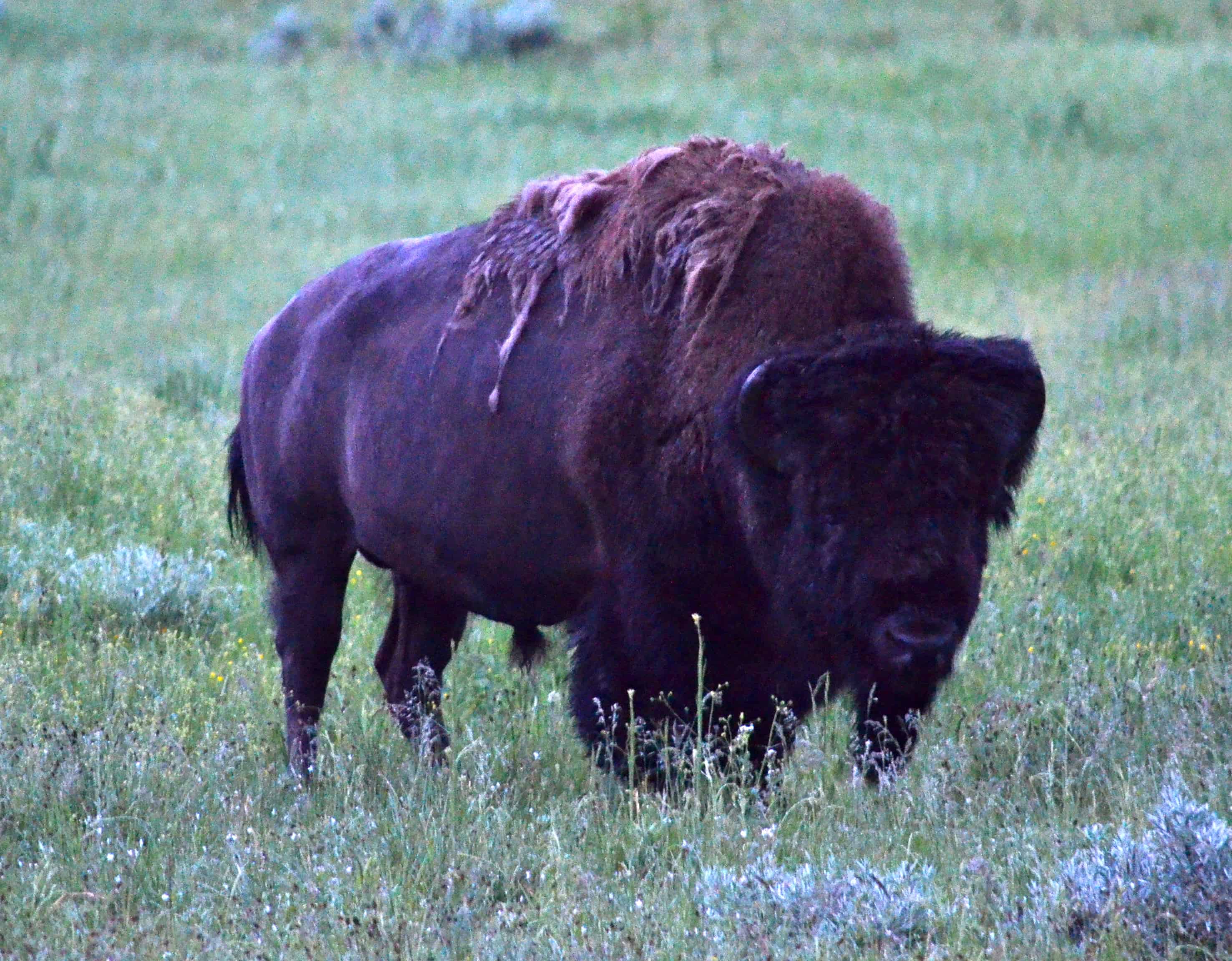
There is a short video of the herd passing the rig on YouTube (here).
Once the herd was past, we drove the northern loop. The terrain there is more mountainous than the southern side. We kept watching for more photo opportunities along the way.
Then there were the waterfalls, including Tower Falls along the Yellowstone River. Photos do not quite capture them. Video does a bit better (here for Tower Falls). The views looking back up the river above the falls, with steam rising out of side valleys, are not like anything else. Signs on the trails warn that no hiking is allowed off the boardwalks, after a geologist slipped some years ago and suffered third-degree burns.
We were lucky enough to find a pair of black bears, one on each side of the road, foraging.
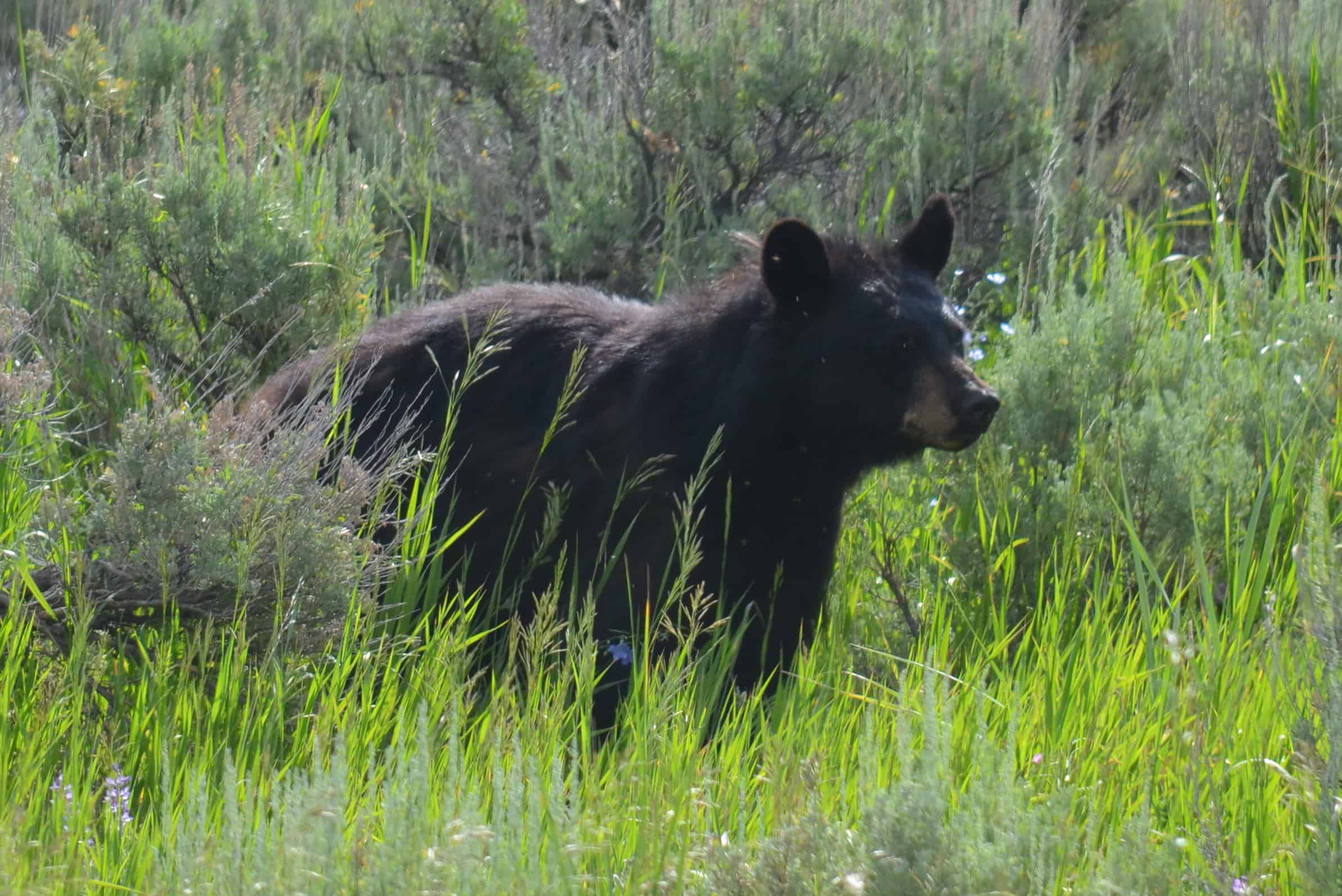
This one was trying to cross, but he was a little put out, since a few people were blocking the way.
Early on Saturday morning we left our campsite and headed south, toward Teton National Forest. Driving along Yellowstone Lake one more time, it was striking how peaceful everything was. Geese floating on the water. A female elk grazing right next to the road.
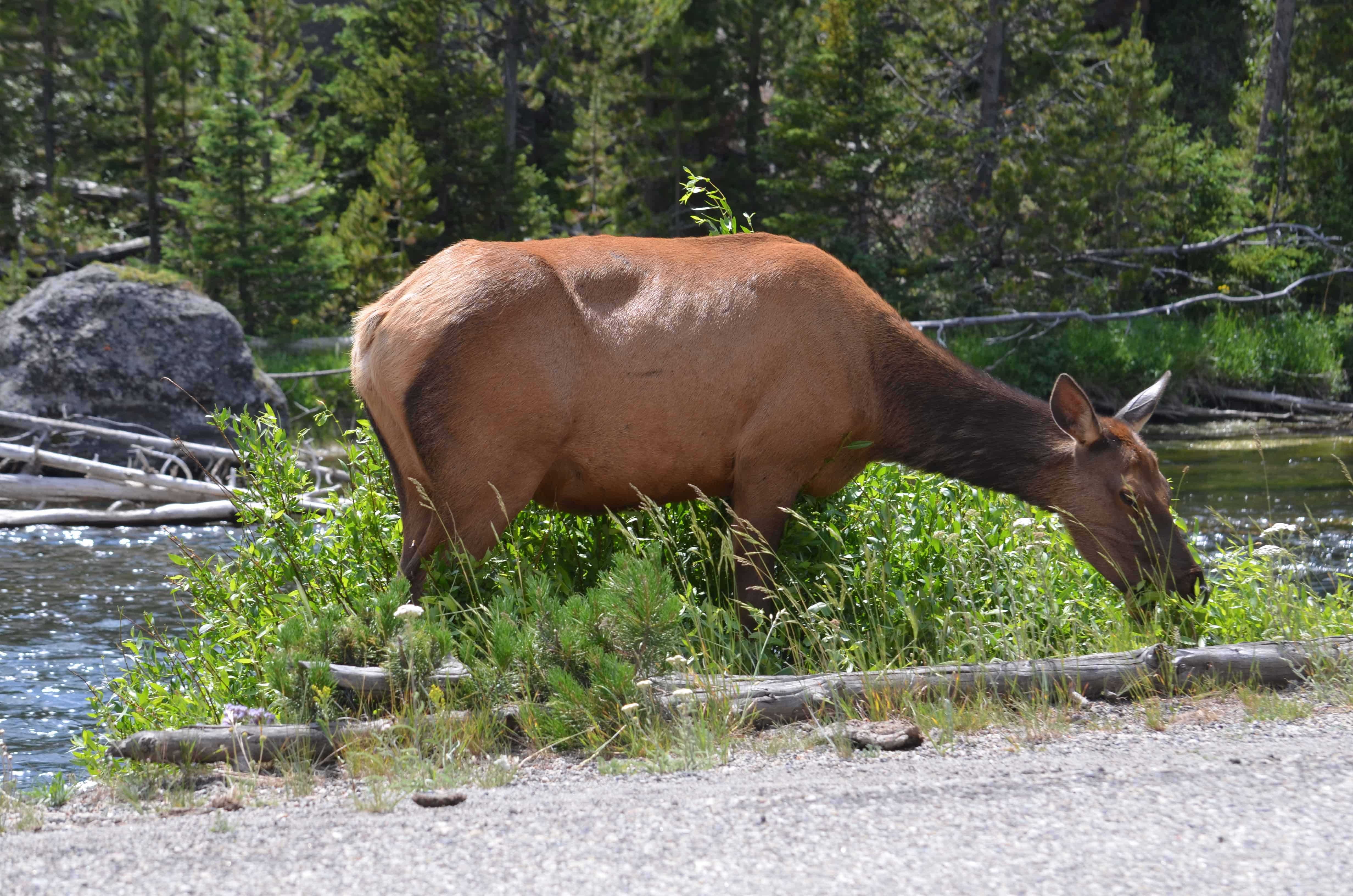
A brilliant, beautiful, peaceful morning.
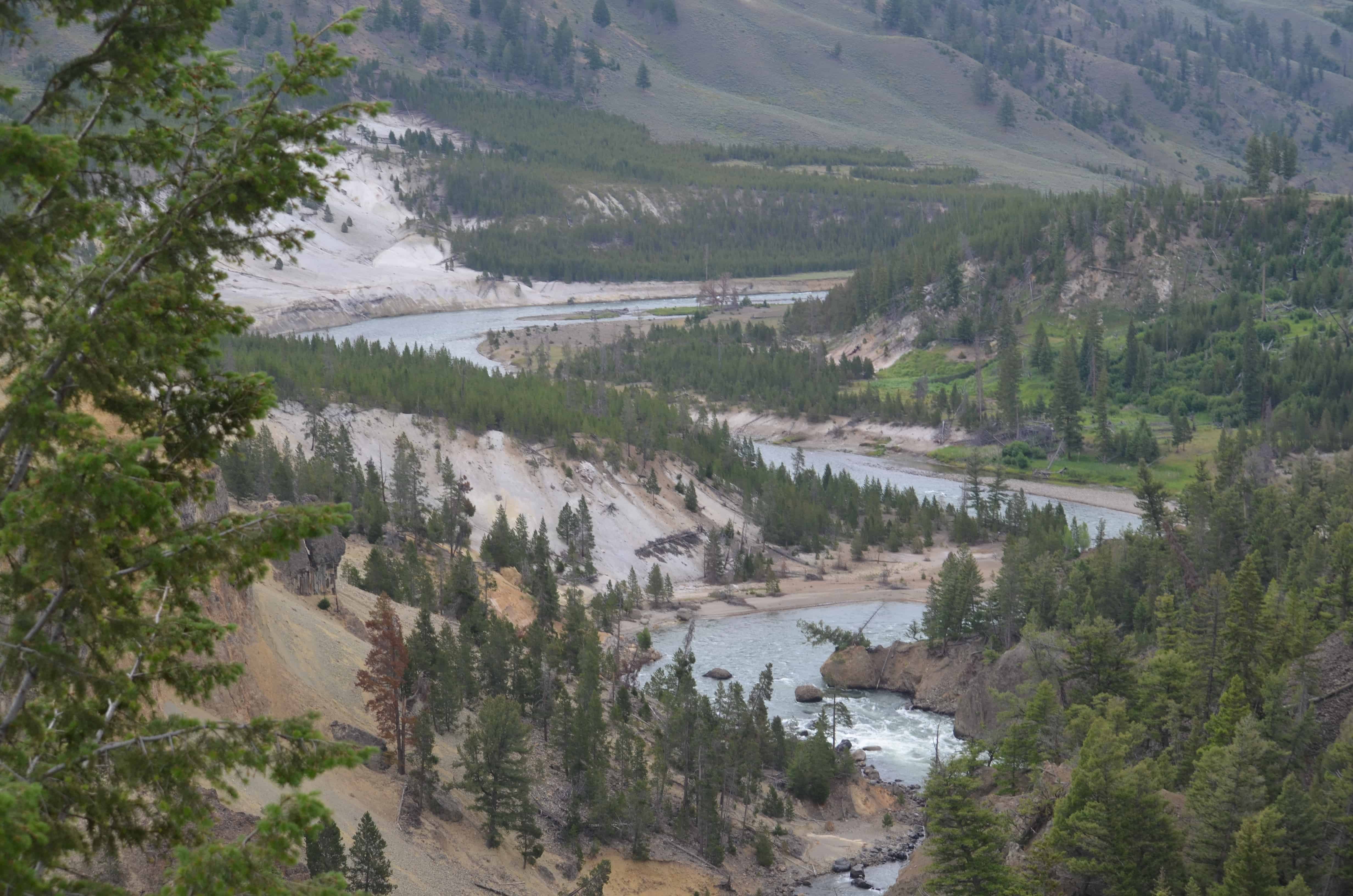
Yellowstone is special. It will always be one of the great destinations among all the places we have visited, here and abroad.