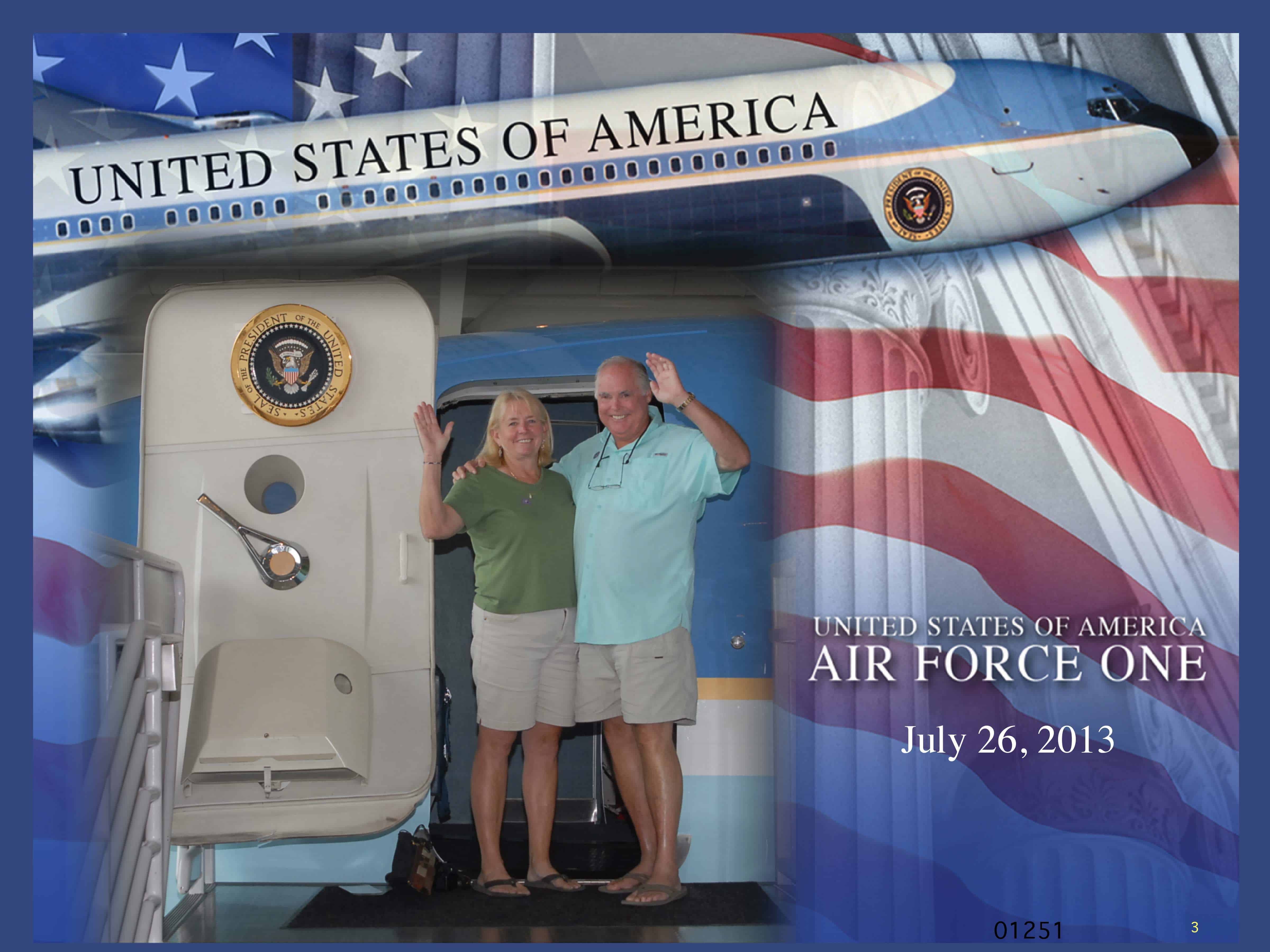
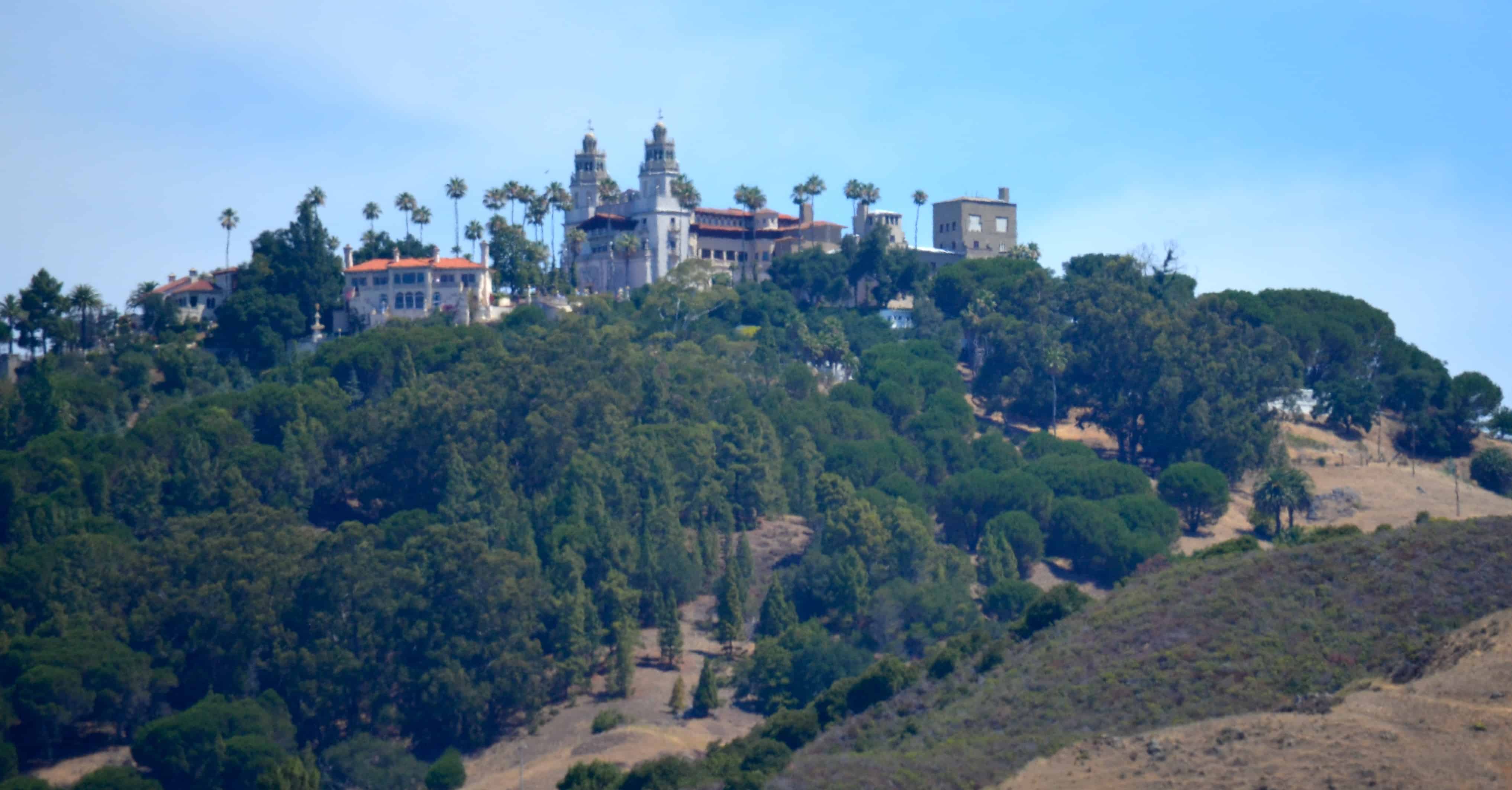
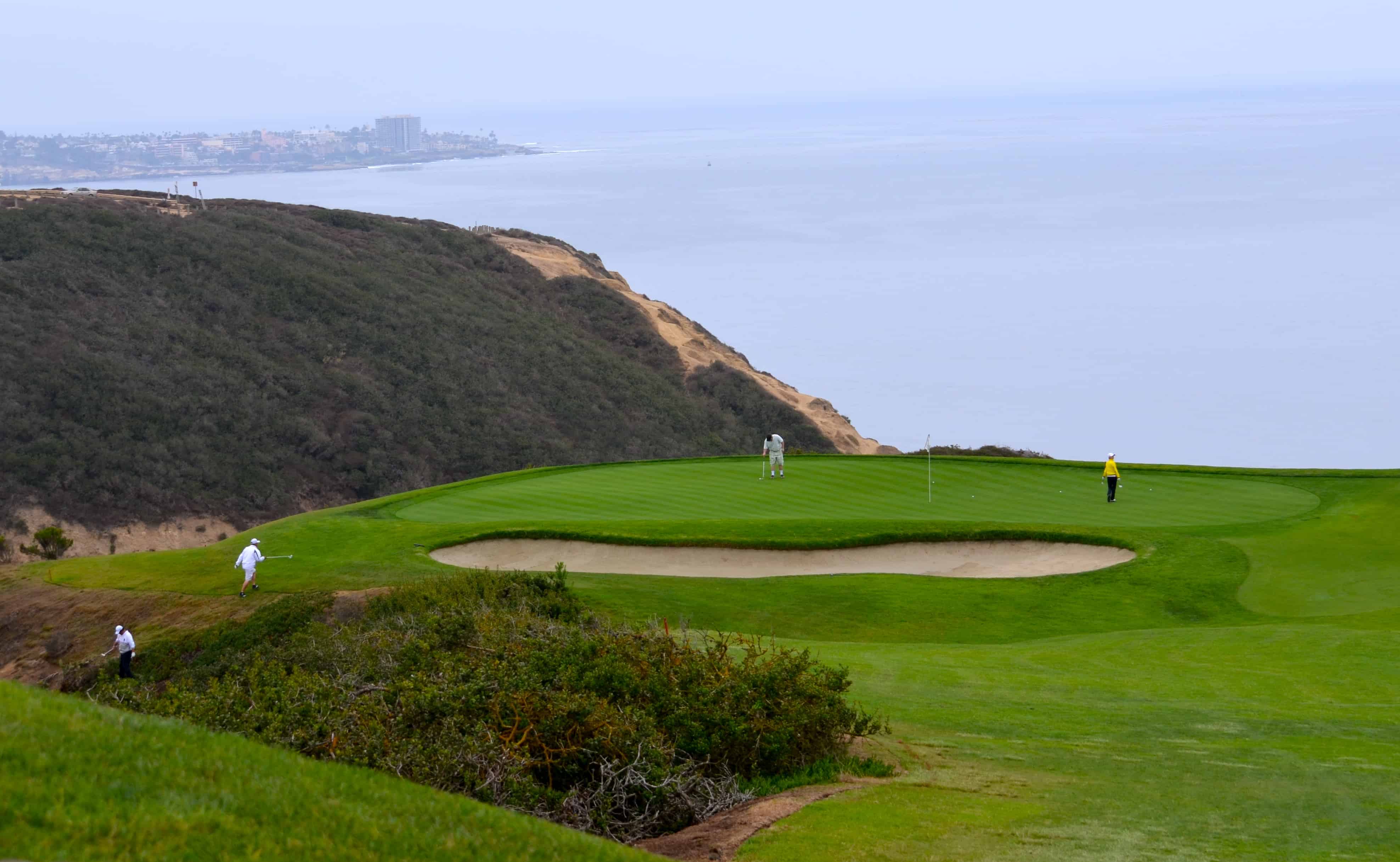
Dateline July 29, 2013, The Richard M. Nixon Presidential Library
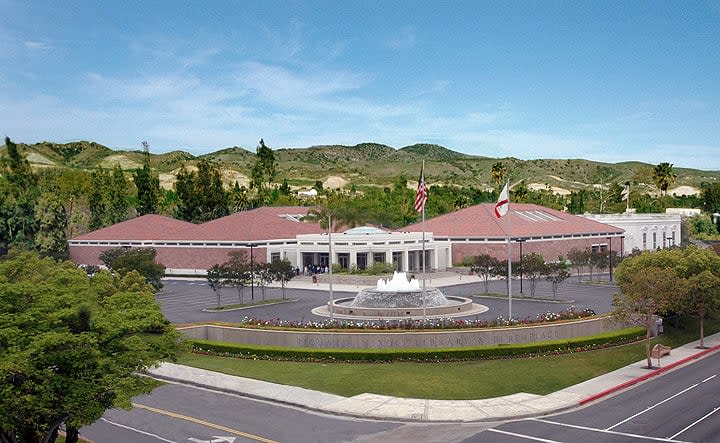
We visited the Richard M. Nixon Library in Yorba Linda, California, where President Nixon was born and where he was buried in 1994 alongside his wife Patricia. There is a personal note to this visit. As we walked through the library, we kept thinking about the fact that this was the first president John ever voted for, back in 1968. Janice could not vote that year. You had to be 21 then, and she was not yet.
The Nixon years have not been taught in school the way Truman's and Eisenhower's have been taught, because the lasting memory in most American minds is Watergate. So let us get that out of the way before talking about everything else the library does well.
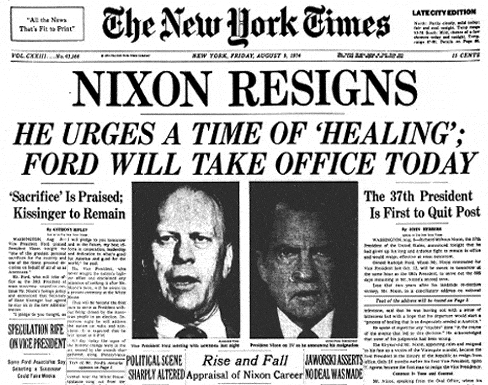
The library handles the resignation story carefully and well. The exhibit walks through the activities that led to it: the so-called Enemies List, drawn up by White House Counsel John Dean as a list of names the administration wanted the IRS to audit (the IRS Commissioner refused to do it), the bungled burglary of the Democratic National Committee headquarters at the Watergate Complex in Washington, and the cover-up that followed. With the House of Representatives moving to impeach him, Nixon chose to resign rather than face trial in the Senate. As the rest of the library makes clear, his resignation was not the end of his service to the country.
The early years.
Nixon was born in Yorba Linda, California to parents who were local merchants. The whole family worked in the family store growing up.
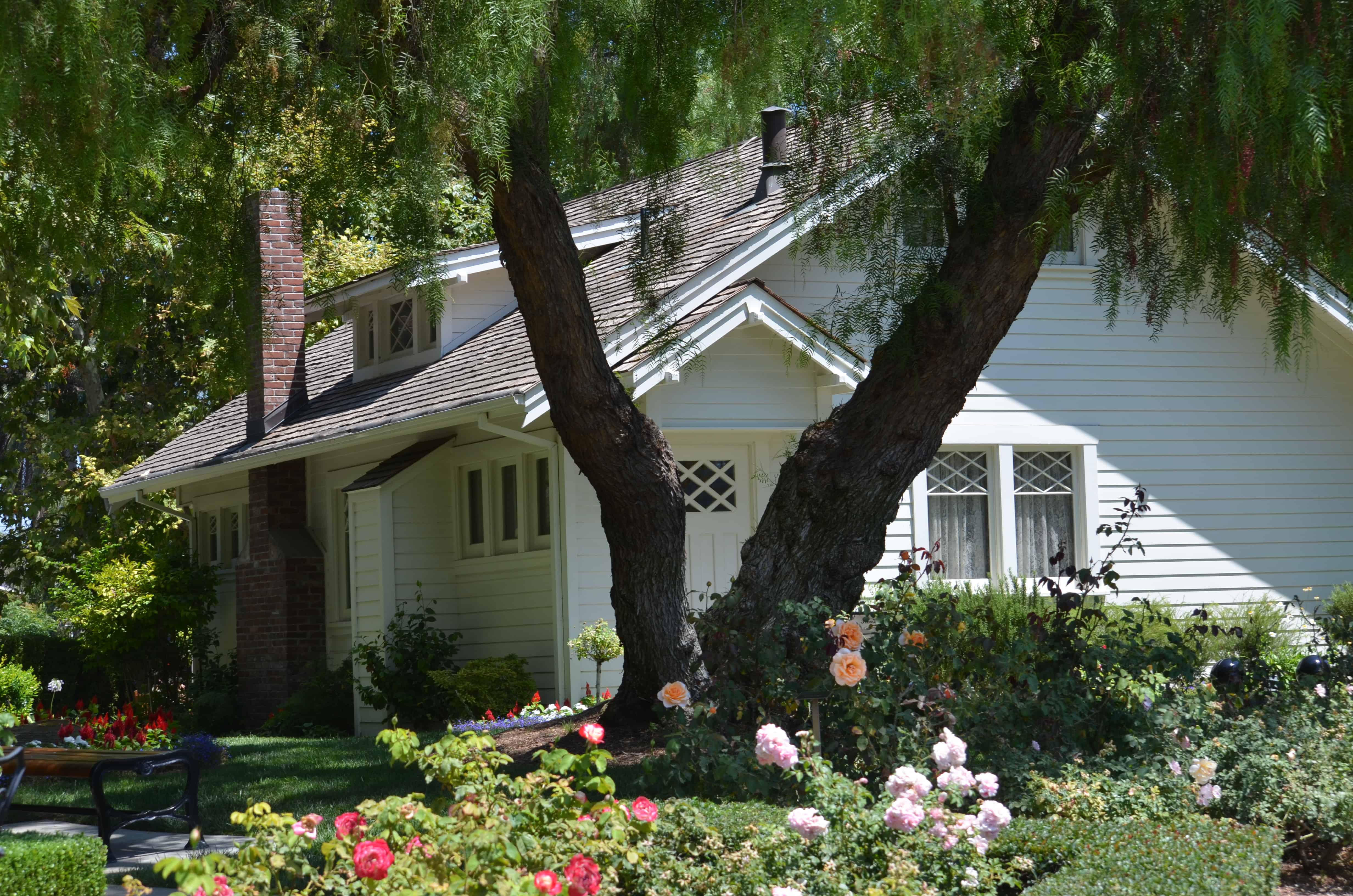
He graduated from Whittier College and then from Duke University Law School in 1937, returning to California to practice law. He and his wife, Pat, moved to Washington for federal-government work in 1942. Nixon subsequently served in the United States Navy in the South Pacific during World War Two. He was elected to the House of Representatives in 1946 and then to the U.S. Senate in 1950. His pursuit of the Alger Hiss case established his reputation as a leading anti-communist and lifted him to national prominence. He was selected as Dwight Eisenhower's running mate on the Republican ticket in 1952.
Nixon served eight years as Vice President. During the 1952 campaign, the press attacked him over a private fund his supporters had assembled to pay travel and other campaign expenses following his 1950 Senate election. Nixon addressed the country on television and radio in a broadcast paid for by the Republican National Committee at a cost of $75,000.
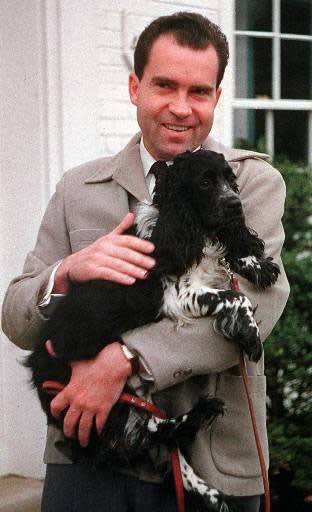
The audience was reported at the time at over 60 million people, the largest political audience in American history to that date. He laid out his finances, defended the fund, and told the country to let the RNC know whether he should remain on the ticket. He noted that there was one gift he would not return: a black-and-white cocker spaniel that the Nixon children had named Checkers. He drew overwhelming support, stayed on the ticket, and Eisenhower-Nixon won that fall. The address is remembered as the Checkers Speech.
He served as Vice President through 1960. Nominated for president that year, he narrowly lost to John F. Kennedy. In 1962 he lost a race for Governor of California. In the years that followed, he worked within the Republican Party and was widely credited as the "big winner" of the 1966 midterms, having stumped tirelessly for House and Senate candidates around the country. He came back to the political field in earnest for the 1968 race. He won all the primaries he entered, took the nomination, and defeated Hubert Humphrey that November.
The library does a fine job with the years that led up to the presidency. The exhibits on his years in the White House are well-documented, and because he lived for so long after his resignation, much of the recorded commentary on his presidency comes from Nixon himself, looking back.
Nixon's domestic accomplishments while in office included:
- The Equal Rights Amendment, which Nixon supported, passed Congress in 1972. Only 35 of the 38 states needed actually ratified before the deadline, and the amendment did not become law.
- School integration: roughly 10% of Southern schools were meaningfully integrated when Nixon took office; by the time he left, the figure was closer to 70%. The era of formal Southern school segregation effectively ended on his watch.
- Revenue sharing was established, returning a portion of federal tax revenue to states, cities, counties, and townships with very few strings attached.
- He ended the military draft, creating the all-volunteer armed forces.
- New anti-crime laws targeted organized crime, including the Racketeer Influenced and Corrupt Organizations Act, known as RICO.
- He began the process of winding down the Cold War.
- His administration recognized and pushed back against foreign oil price gouging.
- He implemented a broad environmental program that became the Environmental Protection Agency. Many of us remember the lakes and rivers of the 1960s, fouled with chemicals and untreated sewage. Most are now safe for recreation. Love Canal, in Niagara Falls, New York, was discovered to be an environmental disaster in 1977, and the EPA framework Nixon had created went on to clean it up and hold Hooker Chemical accountable for the contamination. We all gained an appreciation for the environment and a sensitivity to its harm. Like all things in Washington, environmental policy has remained a contested topic ever since.
- He had one balanced budget year. By some measures, the only one between 1961 and 1998.
Nixon's international accomplishments included:
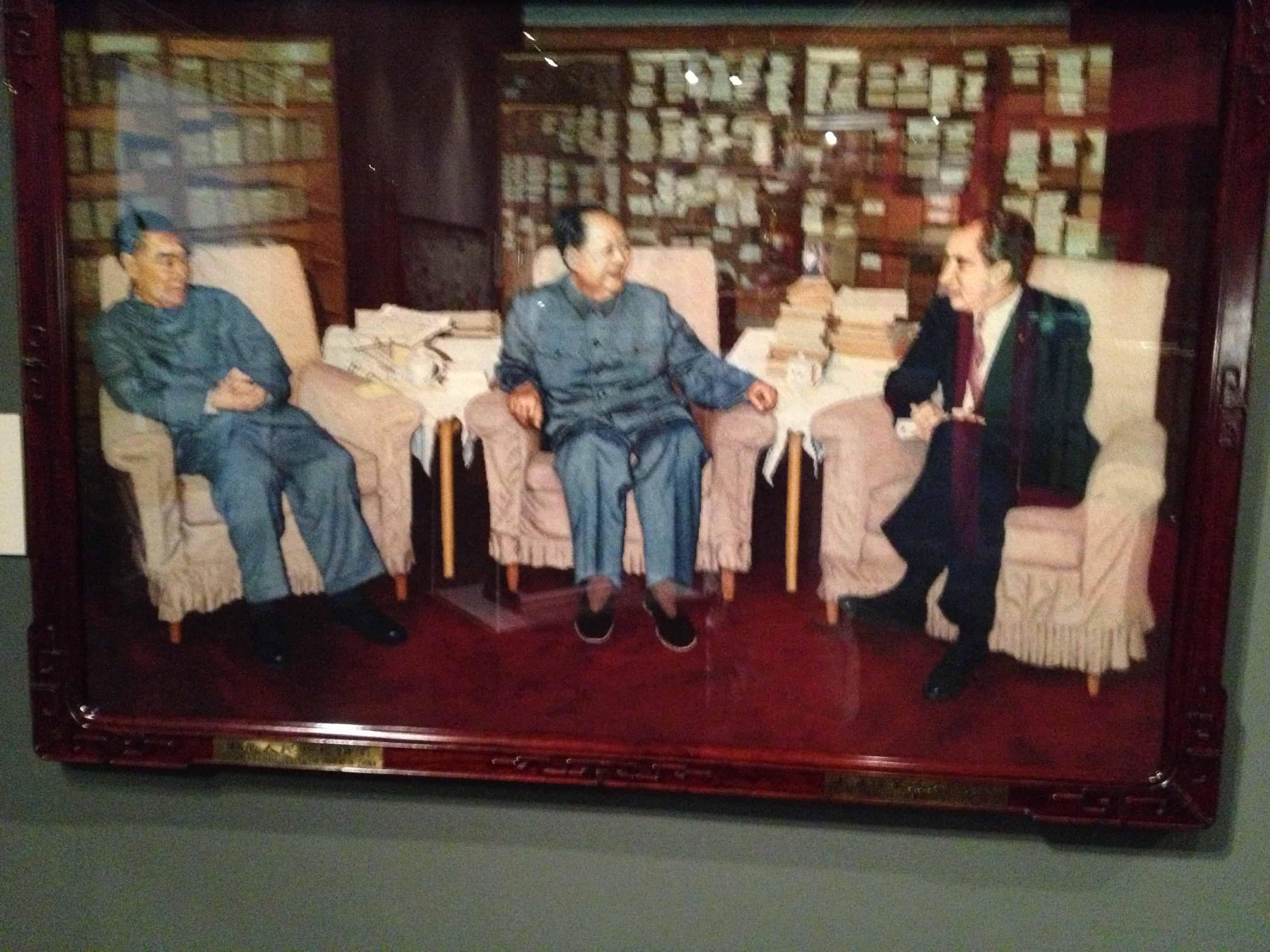
Some of his most acclaimed work came in his pursuit of global stability. His 1972 visits to Beijing and Moscow opened relationships that had been closed for years. His summit meetings with Soviet leader Leonid Brezhnev produced a treaty limiting strategic nuclear weapons. The Chinese government had so much respect for the meeting that they later commissioned a needlepoint of the moment Nixon, Mao, and Zhou Enlai sat down together, which they gave to the Nixon Library in 1991.
In January 1973 Nixon announced the Paris Peace Accords with North Vietnam, ending direct American involvement in the war. American POWs in North Vietnam came home. The flag shown below was made by US prisoners of war over a week's work in the Hanoi Hilton, from whatever materials they could assemble. It served them for eighteen months as the symbol of their country.
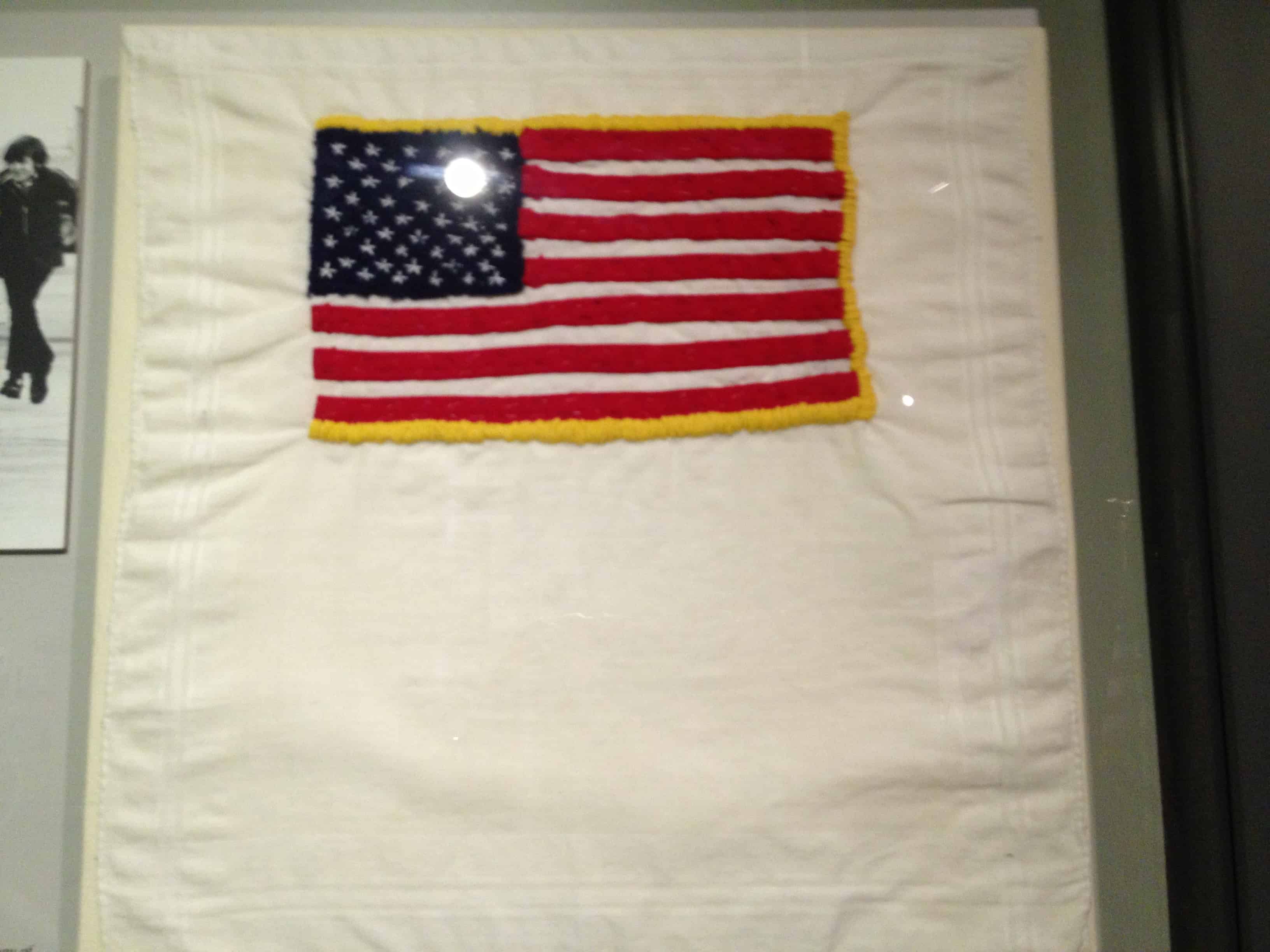
Each evening when their day's activities ended, the flag came out and hung where the men could salute it. It flew all night. They saluted it again before the guards arrived in the morning. It was hidden in mosquito netting during inspections and was never discovered. When the prisoners were finally released, the flag was carried out of the prison sewn between two North Vietnamese handkerchiefs.
In 1974, Nixon's Secretary of State, Henry Kissinger, negotiated disengagement agreements between Israel and her enemies Egypt and Syria.
After the resignation.
Nixon left office deeply in debt. He had personally accumulated over a million dollars in legal bills and other obligations, including unpaid taxes. 1974 was a brutal year and a low point. The man who had recovered from political setbacks so many times before now had to rebuild from a more fundamental kind of ruin. He signed a memoir contract for a $2 million advance and a separate contract with British television personality David Frost for a series of interviews at $600,000. He sold his Florida home and other real estate. His book became a bestseller, and the debt was paid off.
He traveled back to China in 1976 and was warmly received, which opened the door to other international visits. Internationally, the leaders he had worked with continued to engage him directly. They viewed Watergate as an American domestic matter and consulted him on what they remembered him for: foreign policy. In 1978 he began doing small speaking engagements and continued writing political best-sellers. Nixon began to reclaim a place on the national scene. He offered his counsel to anyone who would take it, including President Jimmy Carter, whom Nixon advised on normalizing relations with China in 1978. Both Reagan and George H. W. Bush consulted him on foreign affairs during their own presidencies, though they did not publicize that fact.
Nixon died from complications of a stroke on April 22, 1994. His funeral drew luminaries from around the world, including every living president.
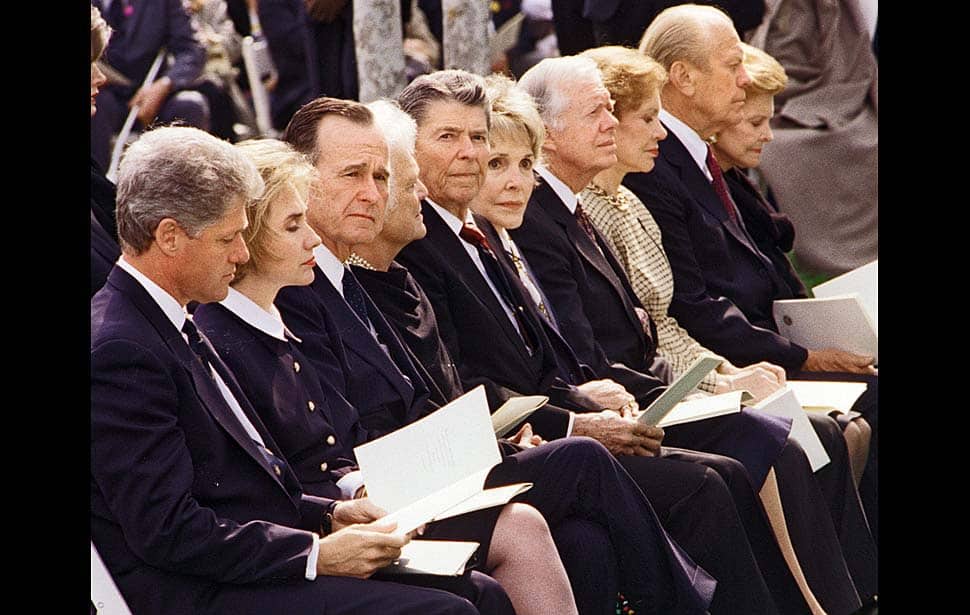
President Bill Clinton's eulogy did not dodge what had happened. But it asked the country to think about Nixon in full. Clinton said: "May the day of judging President Nixon on anything less than his entire life and career come to a close."
Nixon's legacy is genuinely complicated, and the library does the work of presenting all of it. A visit here is a fine historical experience.